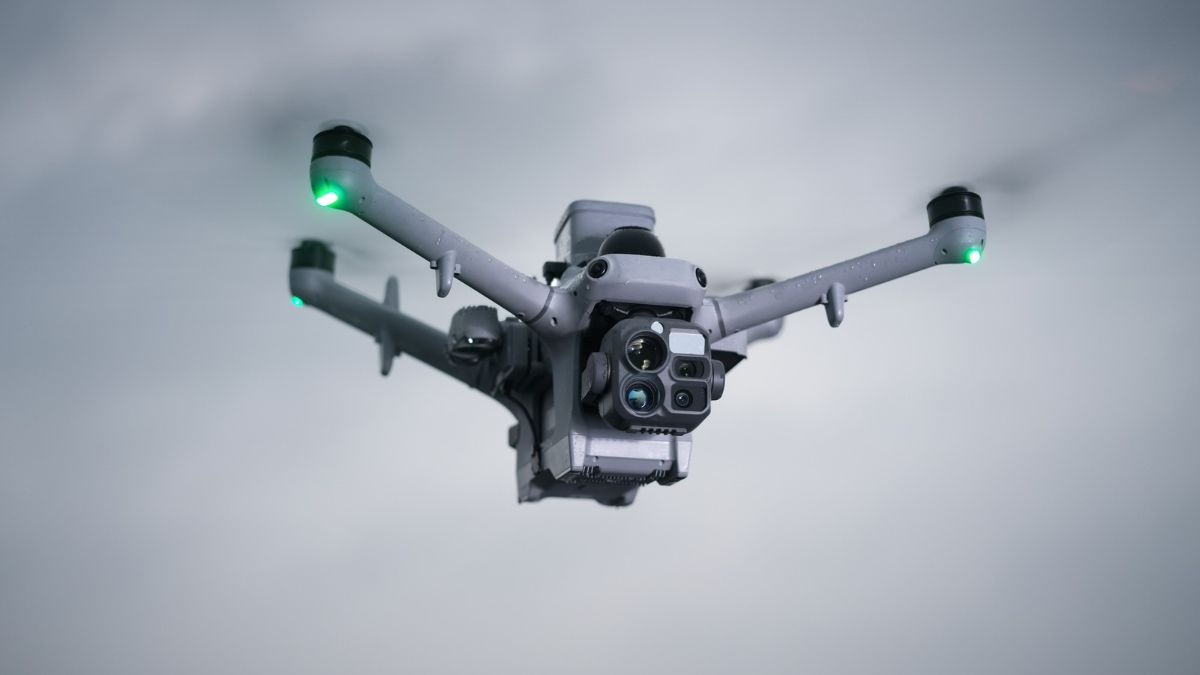
The Spec Comparison at a Glance
Spec | Matrice 5TD | Matrice 4TD |
|---|---|---|
Max take-off weight | 3050g | 2090g |
Max flight time | 59 minutes | 54 minutes |
Max hover time | 55 minutes | 47 minutes |
Max flight distance | 53km | 43km |
Max horizontal speed (FlyTo) | 21 m/s | 21 m/s (Sport) |
Operating temperature | -40°C to 50°C | -20°C to 50°C |
IP rating | IP55 | IP55 |
Thermal camera | 1280×1024, super-res 2560×2048, f/0.85 | 640×512, super-res 1280×1024, f/1.0 |
Laser rangefinder | 3km | 1.8km |
Max hybrid zoom | 176x | 112x |
Onboard AI recognition | 17 target types | People, vehicles, vessels |
Obstacle-avoidance radar | Built in | Optional accessory |
Remote ID detection | Supported | Not supported |
Parachute support | Yes (AP1, pre-installed on UK/EU spec) | No |
Flight Performance
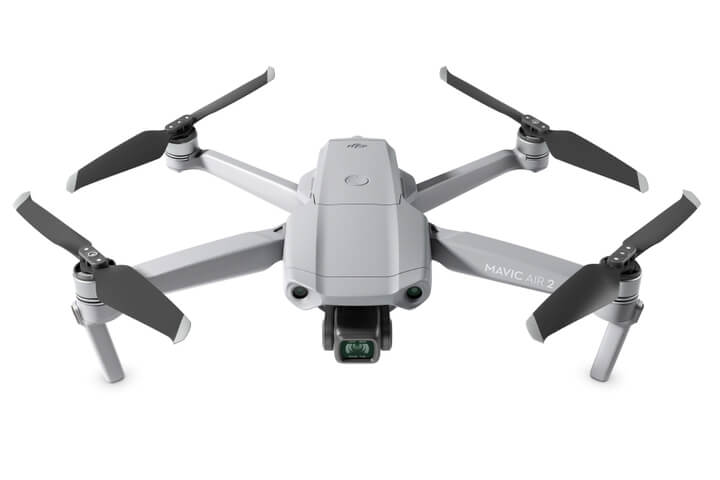
Maximum flight time extends to 59 minutes against the Matrice 4TD's 54, with 48 minutes as the Matrice 5TD's practical operating figure once reserve margins are accounted for. FlyTo speed reaches 21 m/s on both aircraft, but the Matrice 5TD covers a target 3km away in under 3 minutes at that speed, relevant directly to a first-response dispatch where the opening minutes decide what's captured on arrival. Max flight distance extends to 53km against 43km, and operating temperature drops to -40°C against the 4TD's -20°C floor.
Camera and Zoom
Both aircraft carry a wide, medium telephoto and thermal camera, but the Matrice 5TD's super telephoto reaches 11x optical and up to 176x hybrid zoom against the 4TD's 112x, with an upgraded RYYB sensor reading a licence plate from 400 metres away. The thermal camera doubles the 4TD's native resolution, 1280×1024 against 640×512, with super-resolution output up to 2560×2048. The laser rangefinder extends to 3km against the 4TD's 1.8km, and the wide and telephoto cameras fire together in a single shutter action on the Matrice 5TD rather than one view at a time.
Night Performance
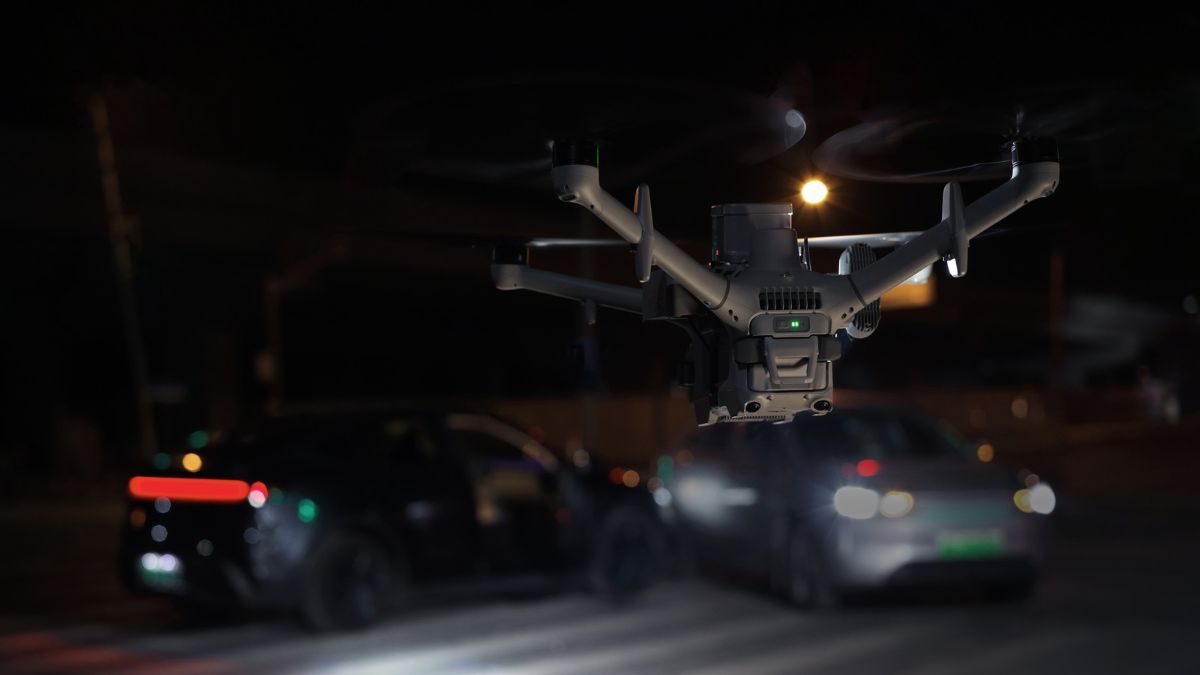
Three changes lift the Matrice 5TD's low-light capability over the 4TD: an upgraded wide camera sensor and a 30%-higher-light-intake RYYB telephoto sensor, a 16x more powerful NPU merging frames at up to 20Hz for 4K night video, and a noise reduction algorithm pushing maximum night-mode ISO to 1,638,400, 2 to 4 times the 4TD's ceiling. RYYB replaces the standard green filter with a yellow one that passes both green and red light, holding a cleaner image in low light than the 4TD's standard sensor.
Mapping Accuracy Trade-off
The Matrice 5TD's CMOS sensor runs smaller than the Matrice 4D's (13.1×9.8mm against 17.3×13.0mm) and uses an electronic rolling shutter rather than the 4D's mechanical shutter, a trade DJI offsets with a 16x more powerful processing chip and an optimised Terra SDK algorithm that compensates for the accuracy gap. Flying nadir or oblique mapping missions at 120m altitude, non-terrain-following, and capturing 12MP images, the Matrice 5TD holds an aerial triangulation check-point accuracy around 10cm, DJI's own stated figure rather than a figure carried over from the 4D unchanged.
Safety and Certification
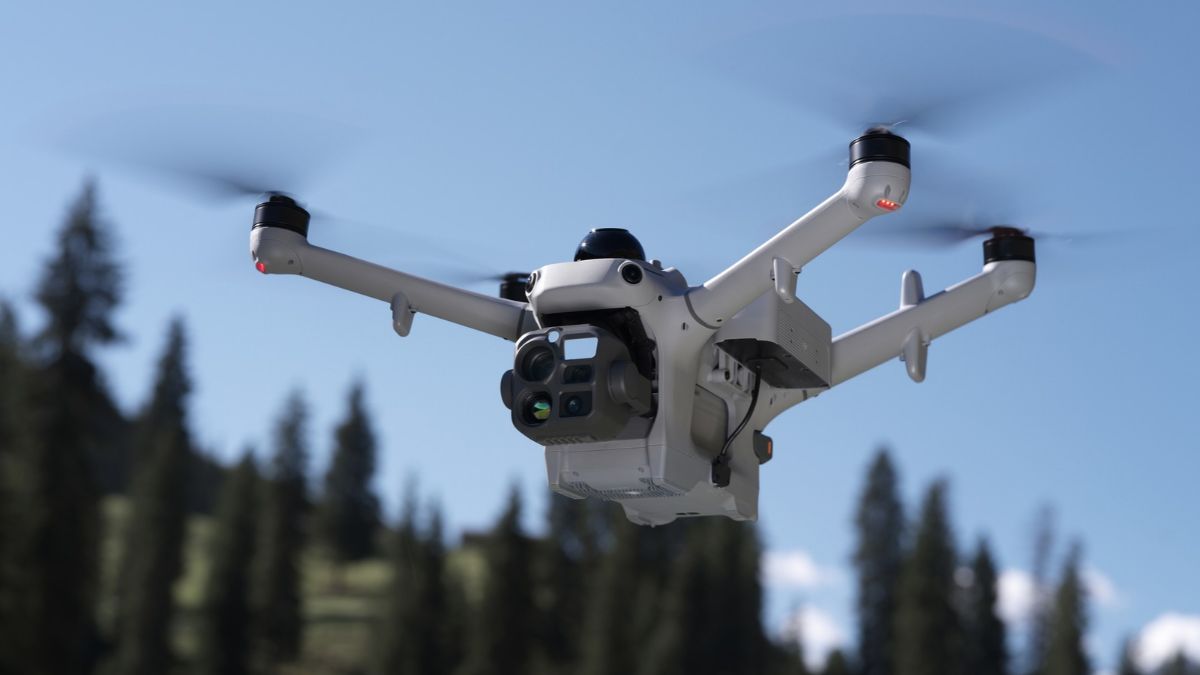
Six full-colour obstacle-sensing cameras run as standard on the Matrice 5TD, built into the airframe rather than sold as a mounted accessory that costs flight time on the 4TD. Remote ID detection is supported on the Matrice 5TD, picking up other Remote ID-equipped DJI drones within 200m for air-to-air coordination, a capability the 4TD doesn't carry. The Matrice 5TD's UK and EU airframe ships with the AP1 parachute pre-installed as standard, validated through more than 45 deployment tests and cutting terminal descent velocity to 6 m/s or below, an accessory the Matrice 4TD doesn't support.
What Actually Changes Between the Two
The flight time, zoom range and thermal resolution gaps matter most on long-range inspection and public safety work, power line and pipeline corridors, licence plate identification at distance, and night operations where the Matrice 5TD's RYYB and NPU improvements show up directly in image quality. The Matrice 4TD remains a confirmed, in-stock aircraft on the established Dock 3 platform for a fleet that doesn't need the longer range or the newer camera system. The two aircraft aren't interchangeable between docks, so the decision is really between the Dock 3 and Dock 4 platforms as a whole rather than the airframes alone.