The Spec Comparison at a Glance
| Spec | Reach RS4 | Reach RS3 |
|---|---|---|
| Price | £3,599.00 | £2,699.00 |
| GNSS tracking | 672 channels, L1/L2/L5/L6 | 184 channels, L1/L2 |
| Tilt compensation | 18mm at 30° tilt | 20mm at up to 60° tilt |
| RTK accuracy | 7mm + 1ppm horizontal, 14mm + 1ppm vertical | 7mm + 1ppm horizontal, 14mm + 1ppm vertical |
| Battery (RTK rover, tilt on) | 16 hrs | 18 hrs (22 hrs logging) |
| IP rating | IP68 | IP67 |
| Operating temperature | -40°C to +65°C | -20°C to +65°C |
| UHF radio | 450MHz, up to 2W, transmit and receive | 410–470MHz, receive only (TRIMTALK 450S) |
| LoRa radio | 915MHz, up to 1W | 868/915MHz, up to 0.1W, 8km range |
| Weight | 927g | 950g |
| Internal storage | 16GB | 16GB |
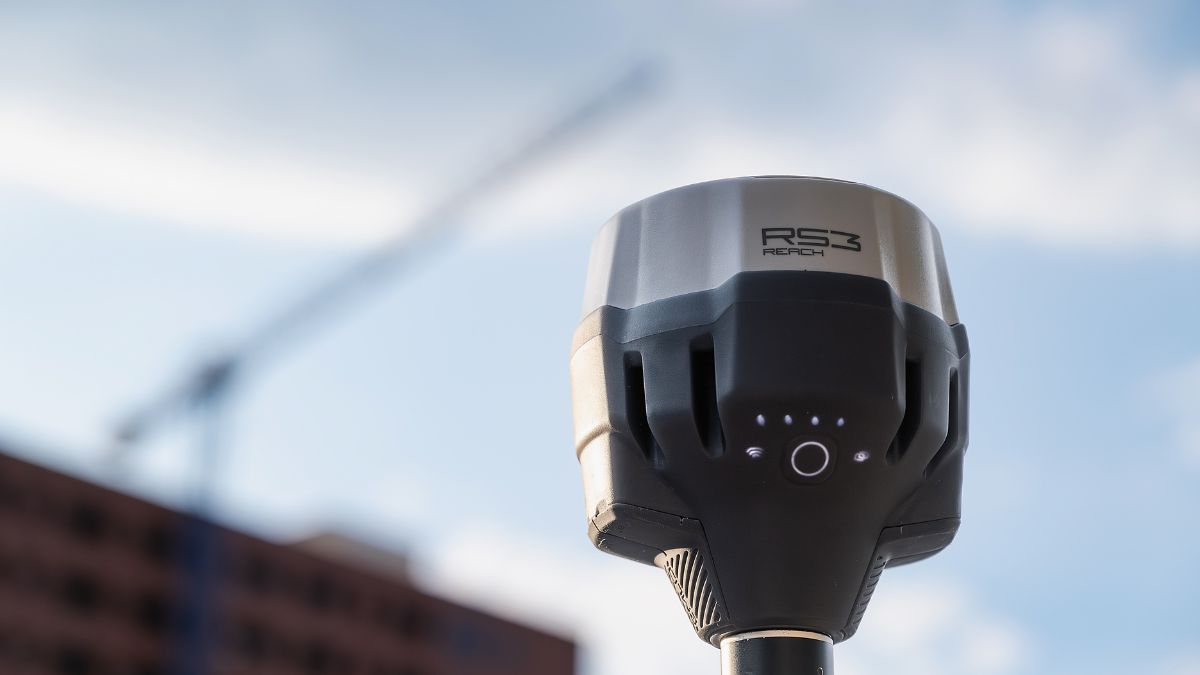
Positioning accuracy is identical on paper. Both receivers hit the same 7mm + 1ppm horizontal figure once a fix is locked, so the decision comes down to how reliably each one gets there and what role you need it to play on site.
Where the RS4 Pulls Ahead
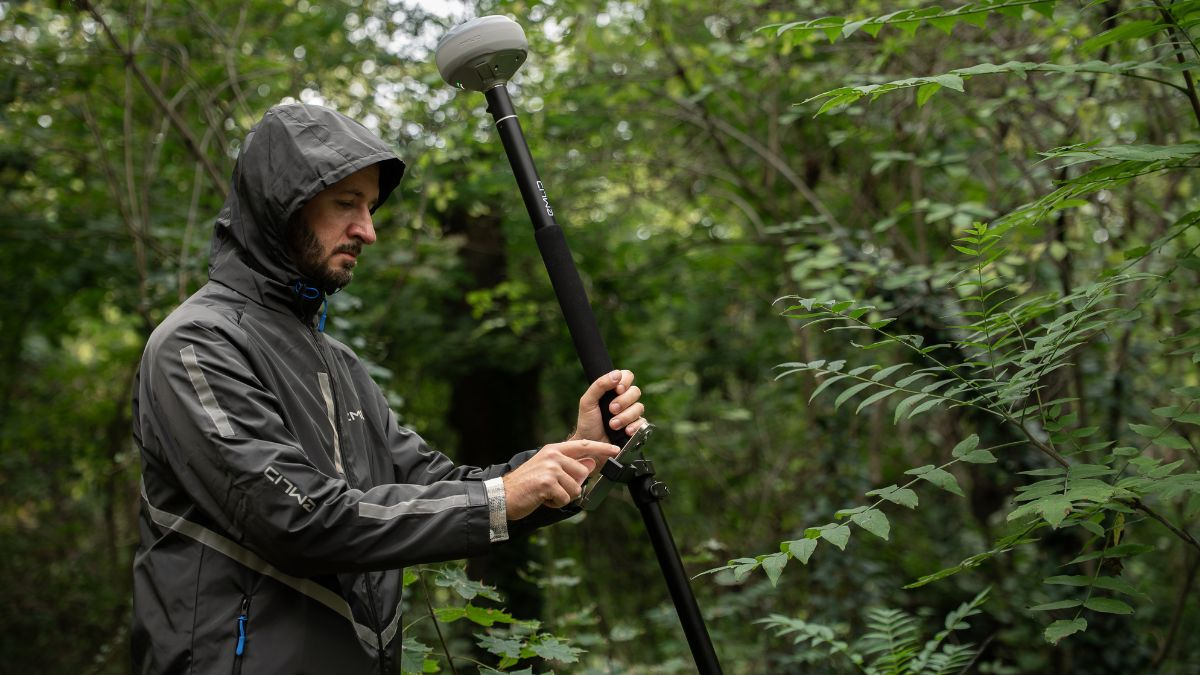
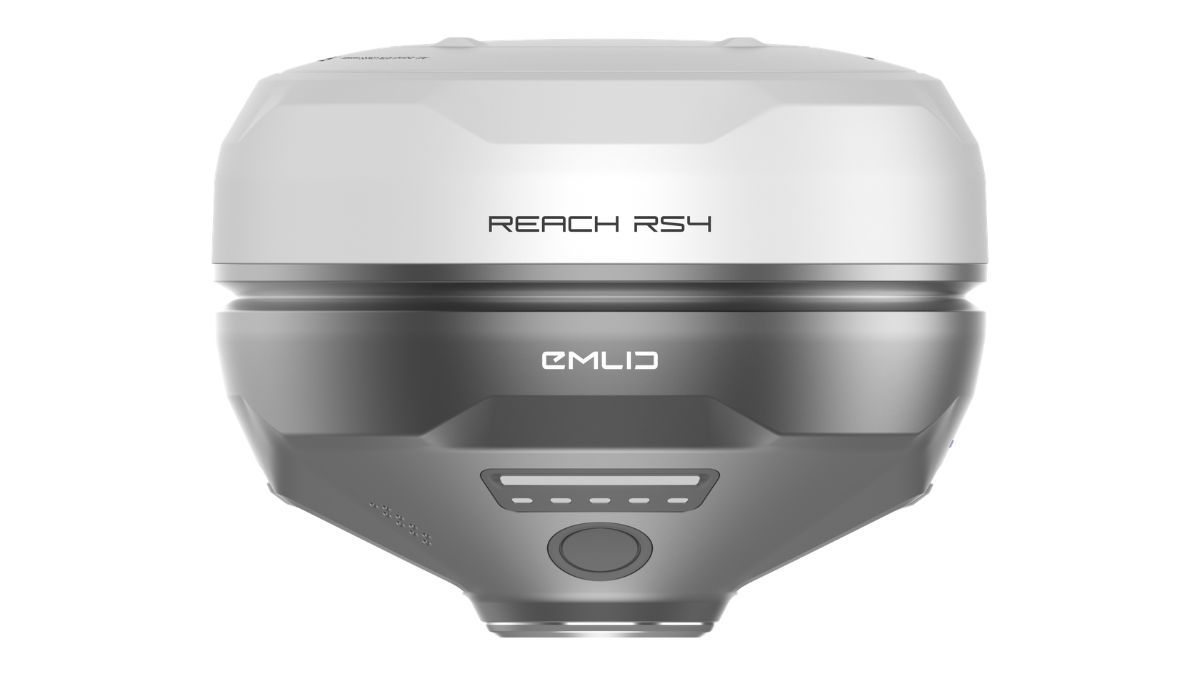
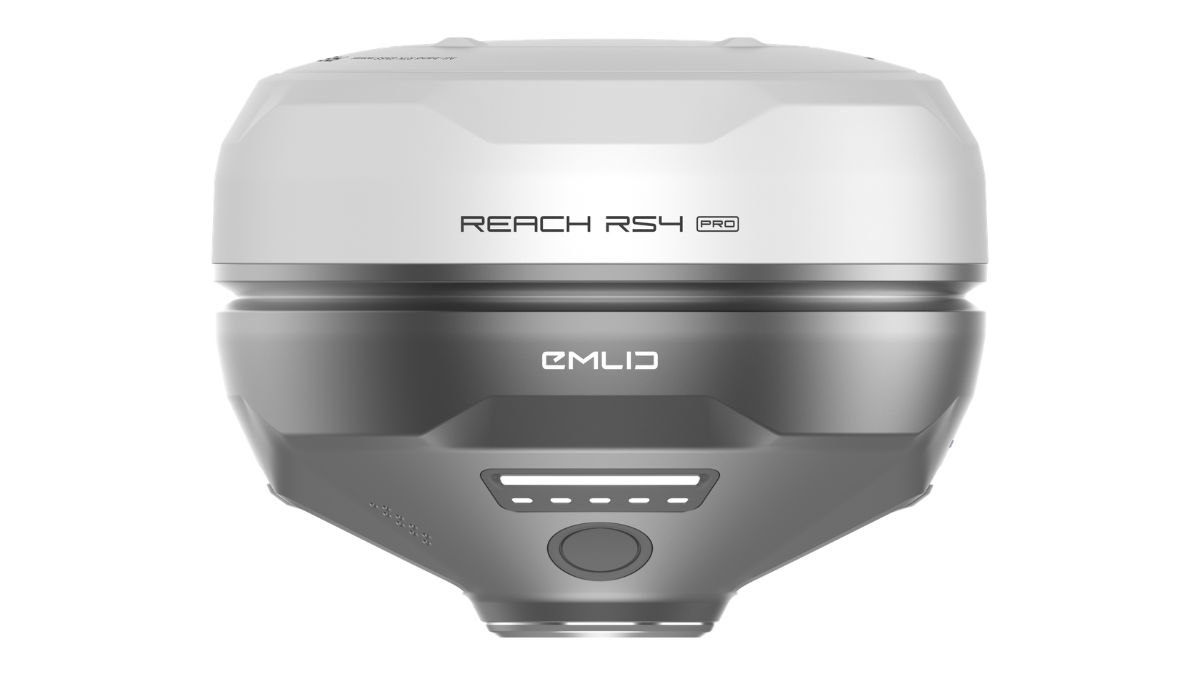
Band coverage is the core difference. The RS4 tracks the L5 and L6 bands across every constellation it supports, giving it more signal paths to work with under canopy, close to scaffolding or between buildings where multipath interference breaks a fix. The RS3's 184 channels cover L1/L2 only, so it has fewer paths to fall back on in the same conditions.
The IP68 rating and -40°C floor extend where the RS4 can sit unattended. A base station left running overnight on a remote site, or deployed in winter conditions, stays within its rated range on the RS4 where the RS3's -20°C floor and IP67 rating do not.
UHF transmission is the operational point that decides a lot of purchases. The RS4 broadcasts corrections over UHF at up to 2W. The RS3's UHF radio receives only. Buy an RS3 expecting to run it as a UHF base station and it will not do that job. LoRa or NTRIP are its only broadcast routes.
Where the RS3 Holds Its Own
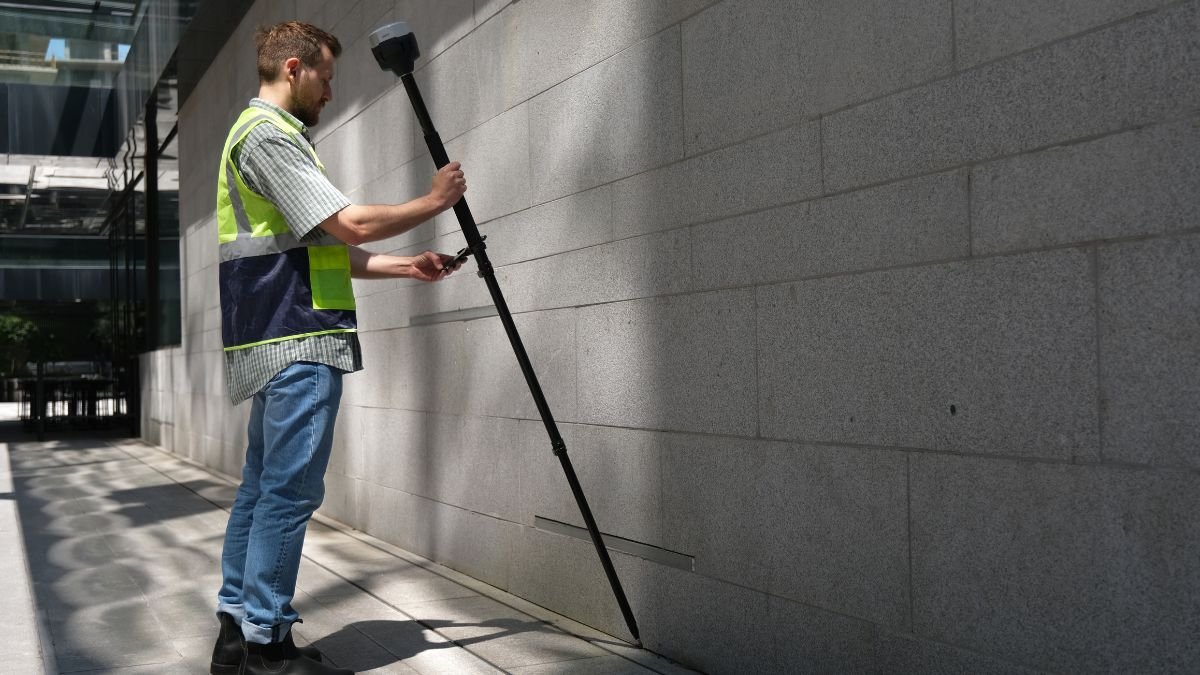
Tilt range is wider on the RS3, not narrower. Its IMU handles up to 60° of tilt at 20mm accuracy against the RS4's 30° figure, which matters on kerb lines, sloped ground and building corners where the pole sits at an angle for most of the shot.
Battery life runs longer. Eighteen hours as an RTK rover with tilt active, rising to 22 hours in logging mode, covers a full field day with margin the RS4's 16 hours does not always leave.
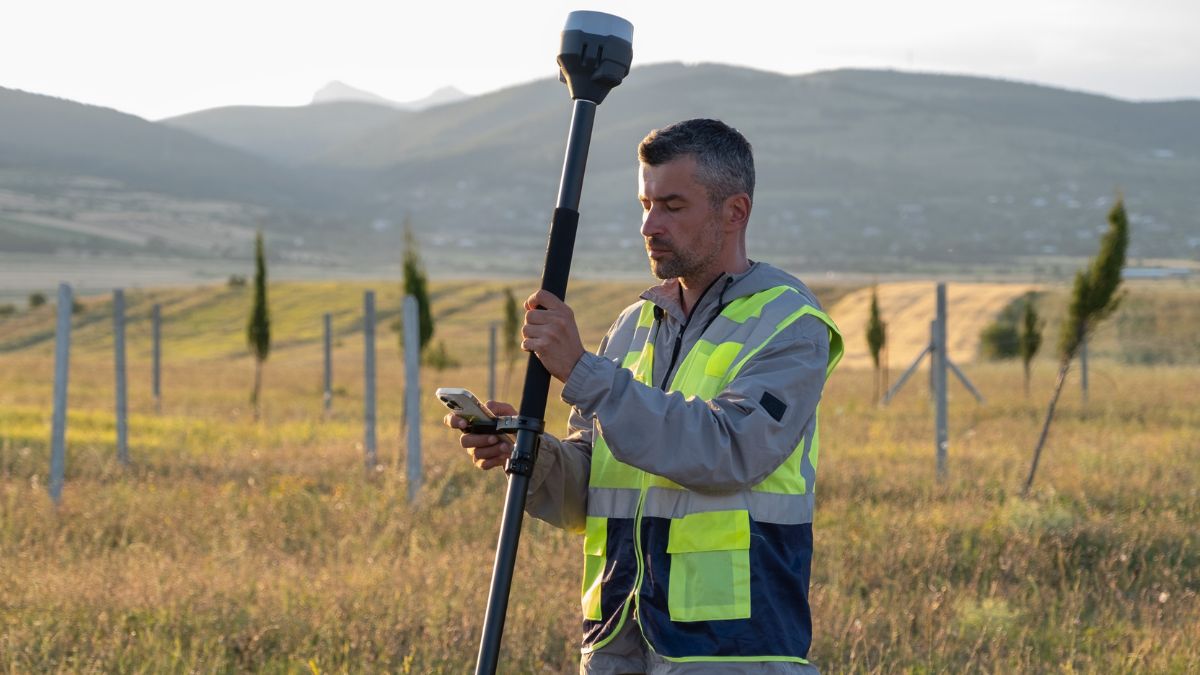
At £2,699, it remains £900 cheaper, and that gap buys a second unit for a base-and-rover pair on some budgets rather than a single receiver. For boundary surveys, topographic work and general construction sites in open signal conditions, none of the RS4's extra band coverage gets used.
Base and Rover Roles Explained
Both receivers work as a rover out of the box, pulling corrections from an NTRIP network or a fixed base. Where they diverge is which one can serve as that base.
The RS4 broadcasts over UHF at up to 2W or LoRa at up to 1W, making it the straightforward choice for a fixed base station covering a wide site. The RS3 broadcasts over LoRa only, at 0.1W with a stated range up to 8km, or through Emlid's NTRIP Caster where an internet connection is available.
Run one RS4 as a base and either an RS4 or RS3 as a rover, and the pairing works. Run two RS3 units and you still have a working base-and-rover pair over LoRa or NTRIP. It will not extend as far, and it will not transmit over UHF the way the RS4 does.
Running Costs and What's Included
Both receivers ship with a full year of Emlid Corrections included, a VRS service valued at £699 and delivering 1–2cm accuracy across confirmed UK coverage. After year one, Emlid charges directly for renewal at $699 per year or $1,199 for three years.
Where NTRIP coverage is patchy or a project runs indefinitely, our RTK Network Subscription is a UK-priced alternative: £1,080.00 for a year of unlimited access across more than 2,000 base stations, or £180.00 for 30 days on single projects.
Either receiver also works with its own base station instead of a subscription. That trades a recurring cost for the £3,599 or £2,699 upfront spend, which suits fixed sites and repeat work in the same location.
Using Either Receiver for Drone Ground Control Points
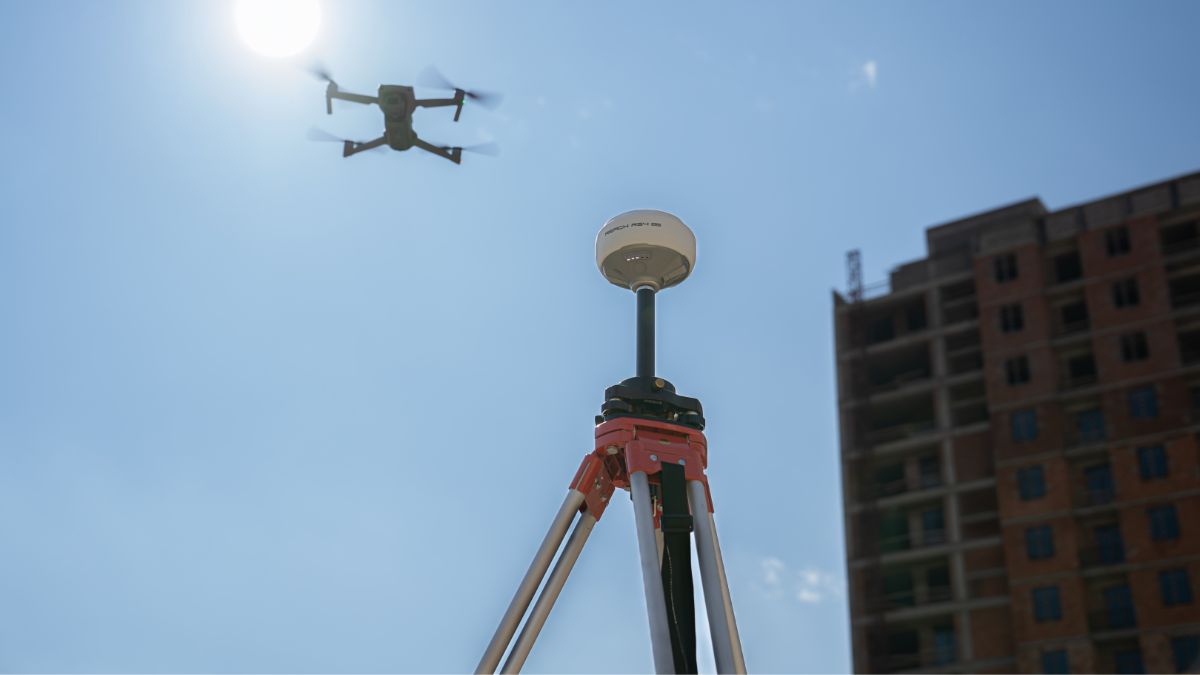
Both models serve the same function on a drone mapping job: establishing ground control points that anchor the dataset to real-world coordinates, or running as a base broadcasting to an RTK-enabled aircraft. Accuracy at the point itself is identical between them.
The RS4 is the safer choice under canopy or near tall structures, where its wider band coverage holds a fix that the RS3 can lose. For open sites, including most agricultural and corridor mapping work with the Matrice 4 Series or Matrice 400, the RS3 does the same job for £900 less.
Mark the point itself with a Goecke 300 x 300mm aerial target plate at £10.00, so the coordinate measured on the ground is the pixel the processing software finds in DJI Terra.
Which One to Buy
Choose the RS4 for canopy, scaffolding or built-up sites where fix reliability under interference is the priority, or where the receiver needs to run as a UHF base broadcasting over distance.
Choose the RS3 for open construction sites, boundary surveys and topographic work where signal conditions are reasonable, or as a lower-cost second unit paired with an RS4 base.
Choose the RS3 over the RS4 on tilt-heavy work specifically. Kerb lines, building corners and steep boundary points suit its 60° tilt range better than the RS4's 30° figure, regardless of budget.
Pole and mounting hardware applies to either model. The Emlid Survey Pole at £299.00, Quick-Release Adapter at £119.00 and Smartphone Mount at £99.00 cover the standard field setup, and any play in the quick-release connection compromises tilt accuracy on both receivers equally.

RTK Network Subscription - 1Y Unlimited
More than 2000 Base Stations · Accuracy of 1.5cm with EU Certification
 Free Gifts Included

 Free Gifts Included
 Free Gifts Included
 Free Gifts Included
Common Questions
Yes, over LoRa at up to 0.1W with a stated range of 8km, or through Emlid's NTRIP Caster where there is an internet connection. It cannot transmit over UHF. That role is receive-only on the RS3.
Where the site has canopy, scaffolding, reflective surfaces or a need to broadcast over UHF at range, yes. Where the site is open and signal conditions are reasonable, the RS3 returns the same positioning accuracy for less.
Yes. Both establish GCPs to the same accuracy; the RS4 holds a fix more reliably under canopy during that process.
Its battery is larger, 5200mAh against the RS4's 5000mAh, which accounts for the 23g difference and the longer runtime.
No. Both have a built-in cellular modem accepting a Nano-SIM, so either can pull NTRIP corrections independently without tethering to a phone.