DJI Matrice 5T for Maritime Operations
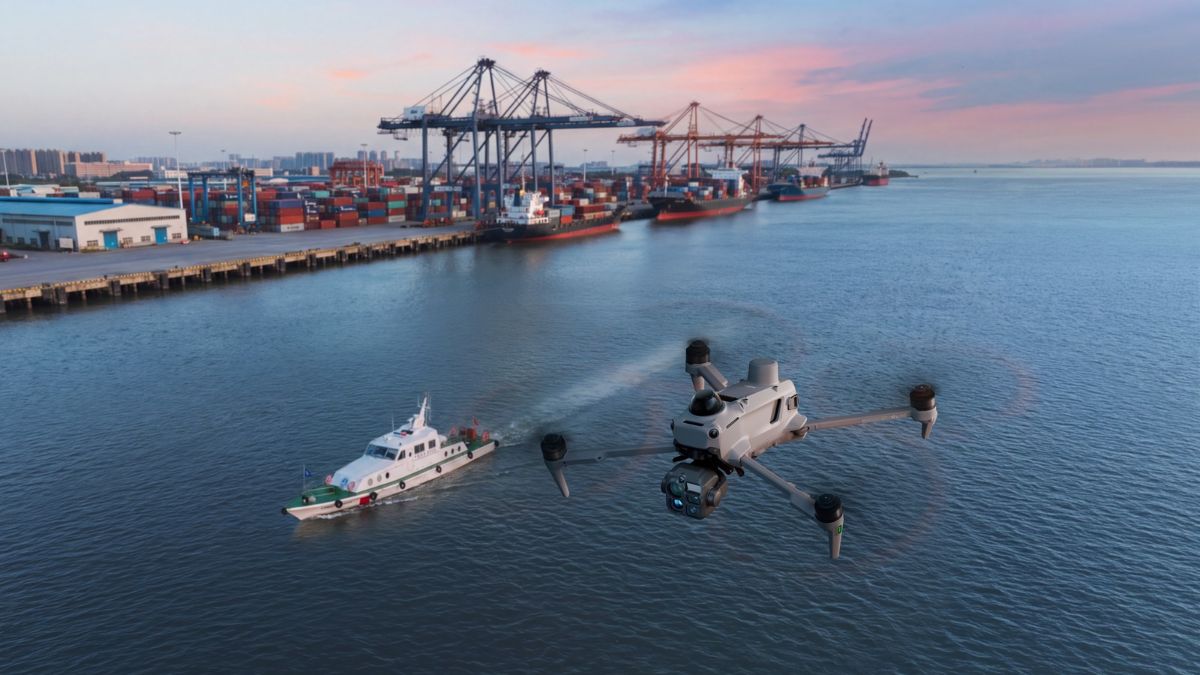
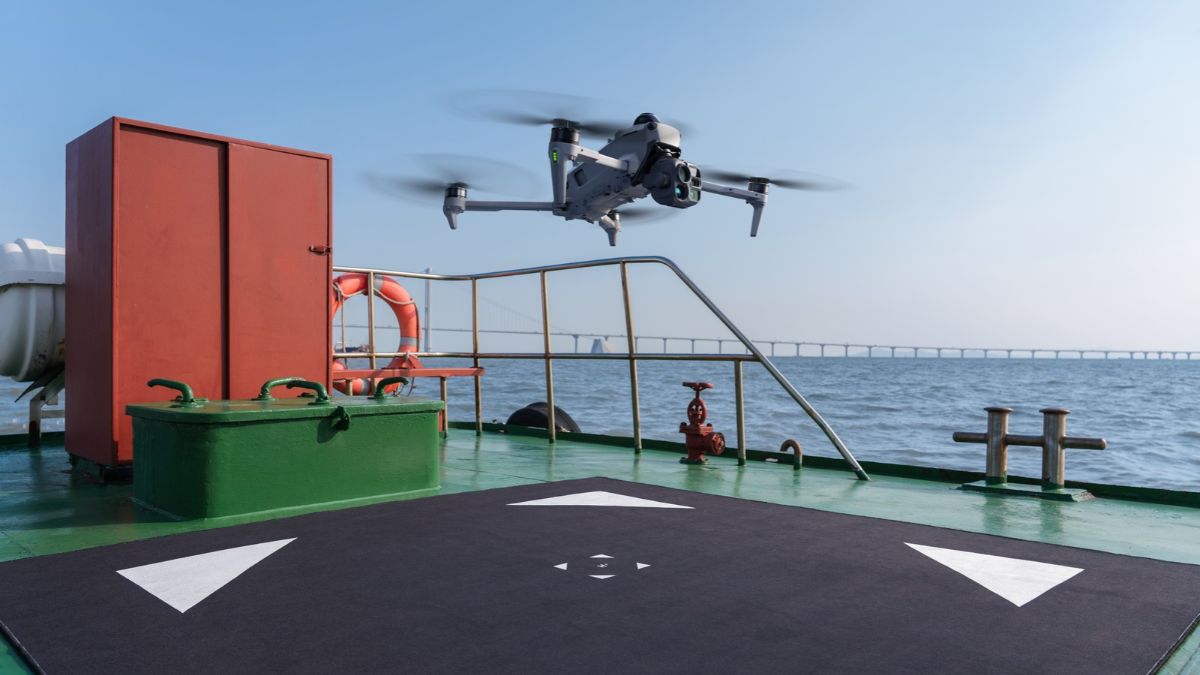
Shipborne takeoff and landing support brings the Matrice 5T onto a vessel directly, confirmed on DJI's own product page as one of the aircraft's core deployment modes rather than a workaround bolted on afterward. A perception suite combining LiDAR, mmWave radar and full-colour omnidirectional vision keeps the aircraft flying close to a vessel's rigging, mast and superstructure without that risk falling entirely on the pilot. This guide covers what the Matrice 5T actually brings to vessel-based and coastal maritime work: deck operation, long-range search, onboard communication, and what DJI hasn't published that's worth confirming before committing a fleet to shipborne use.
Quick Reference: Maritime-Relevant Specs
Spec | Figure |
|---|---|
Deployment mode | Shipborne takeoff and landing support |
Perception suite | LiDAR, mmWave radar, full-colour omnidirectional vision, Vision Assist |
Thermal camera | 1280×1024, 2K UHR mode |
Max hybrid zoom | 176x with IR cut filter |
Night vision | Full-colour wide-angle, 1/0.98" sensor |
Laser rangefinder | 3km |
Max flight time | 59 minutes |
Max flight speed | 23 m/s |
Video transmission | Up to 20km (CE, UK and EU) |
IP rating | IP55 |
Operating temperature | -20°C to 50°C |
Aircraft awareness | Built-in ADS-B and Remote ID receivers |
Controller | DJI RC Plus 3 Enterprise (handheld) |
Shipborne Takeoff and Landing: What's Actually Confirmed
DJI's own product documentation confirms shipborne takeoff and landing as a supported deployment mode for the Matrice 5T, the headline reason this aircraft covers maritime work rather than needing a separate airframe for it. What DJI hasn't published alongside that confirmation is a specific deck-motion or vessel-heave tolerance figure, the kind of number a crew planning routine operation from a moving vessel in open water would want before committing to it as standard practice. Call the team to talk through the specific vessel and sea conditions a deployment needs to cover rather than assuming a figure that isn't on DJI's own spec sheet.
The aircraft's IP55 rating covers dust and water-jet ingress protection, confirmed at the same level as the rest of the Matrice 5 generation, but it isn't published as a dedicated marine corrosion or salt-spray certification. A crew running regular sea-going missions should factor routine salt-exposure maintenance into its own servicing schedule rather than treat IP55 alone as a marine-specific guarantee.
Perception and Obstacle Sensing Close to a Vessel
The LiDAR and mmWave radar perception suite extends obstacle sensing to wire-level detection, relevant the moment a flight path runs close to a vessel's mast, rigging, crane arm or antenna array, the kind of cluttered airspace a standard vision-only system can miss. Full-colour omnidirectional vision and Vision Assist back this up across the rest of the aircraft's surroundings, running at IP55 across a -20°C to 50°C operating range that covers most coastal and open-water conditions.
Night and Long-Range Search
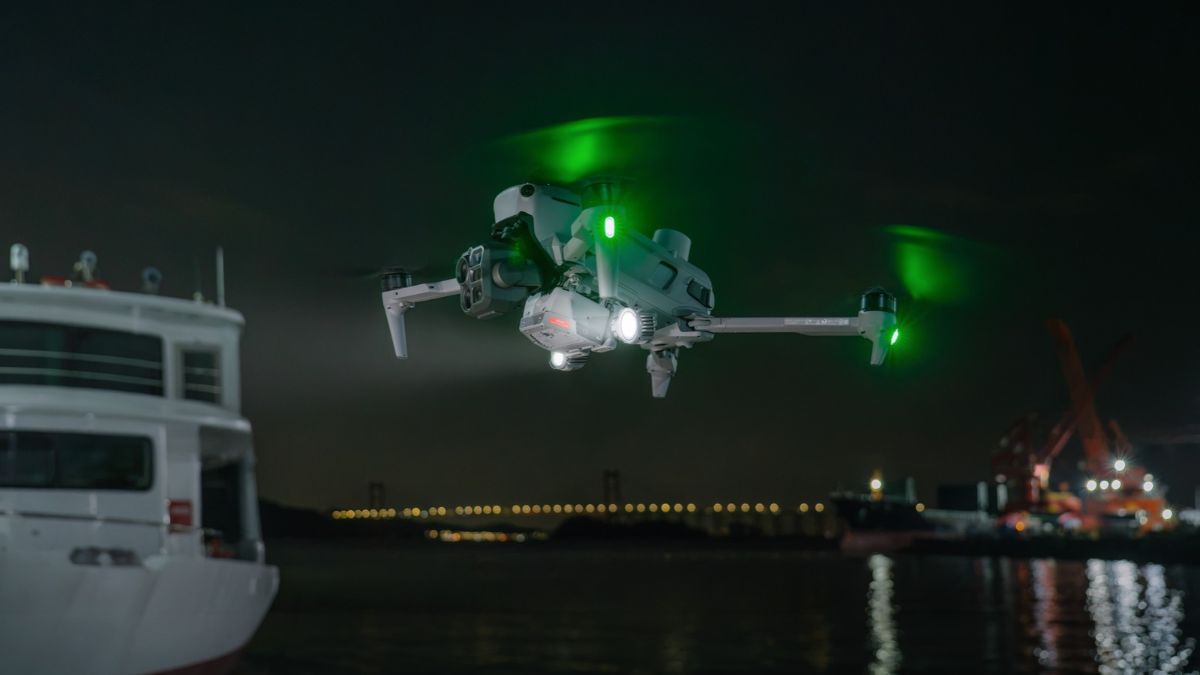
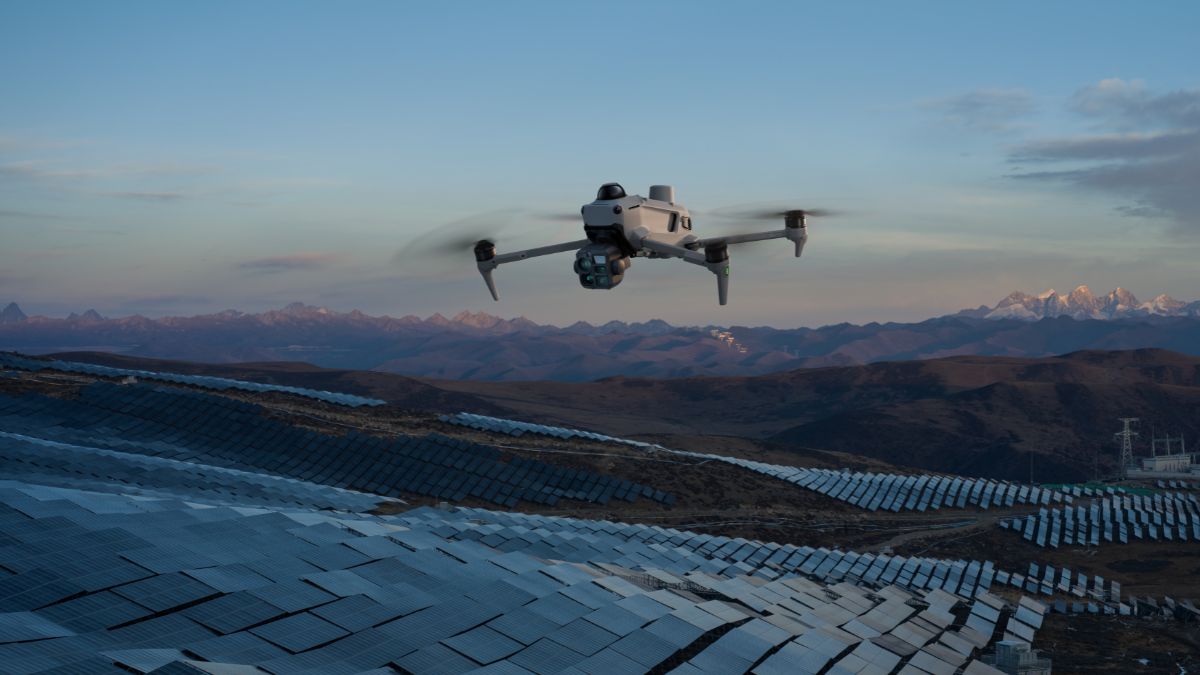
A 1280×1024 thermal camera with 2K UHR mode and up to 176x hybrid zoom covers wide-area search and close-range identification from the same gimbal, relevant to a person-overboard search or a vessel identification task at range without a lens change. A full-colour wide-angle night vision camera extends usable visual capture well past dusk, and a 3km laser rangefinder adds a direct distance reading to another vessel or a hazard spotted during the same flight. Thermal-visible fusion display puts both feeds in front of the pilot at once rather than switching between them mid-search.
Direct Communication and Signalling at Sea
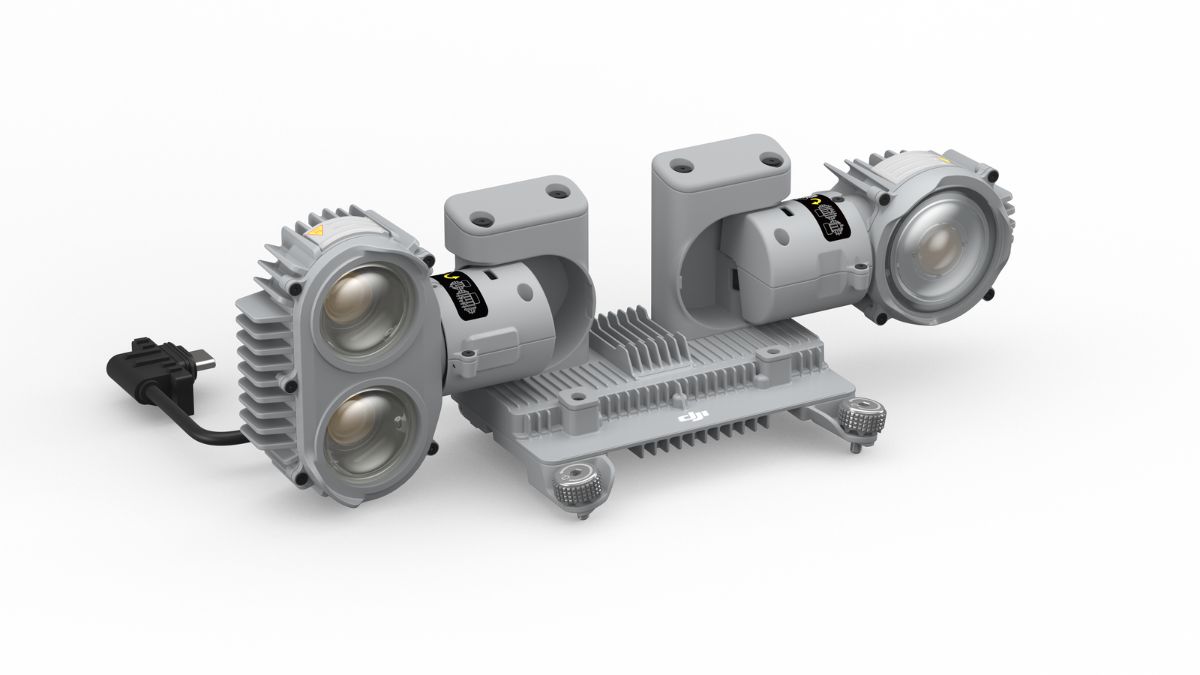
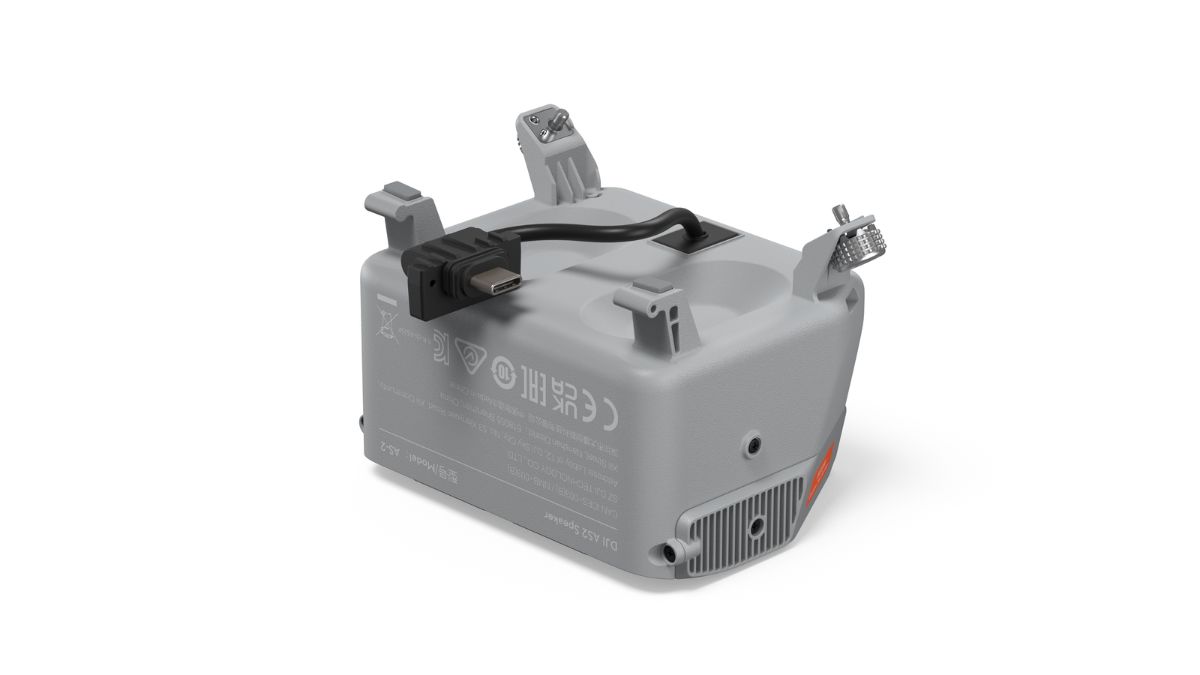
The DJI AS2 Speaker reaches 120dB at 1 metre over an effective 400 metre broadcast distance, supporting real-time broadcasting, recorded playback and text-to-speech, confirmed on DJI's own Matrice 5T specification page. This covers hailing a vessel, directing people in the water toward a rescue point, or broadcasting a standard safety announcement without closing the distance by boat first. The DJI AL2 SpotLight runs alongside it, Flood mode lighting a search area and Spot mode reaching 10.0 lux at 100m for picking out a single point in open water, with its own Strobe mode available for direct signalling.
Both accessories are confirmed by DJI as exclusively compatible with the Matrice 5T, not shared across the wider Matrice 5 generation, worth checking before budgeting for a mixed-fleet accessory set.
Coverage and Endurance Over Open Water
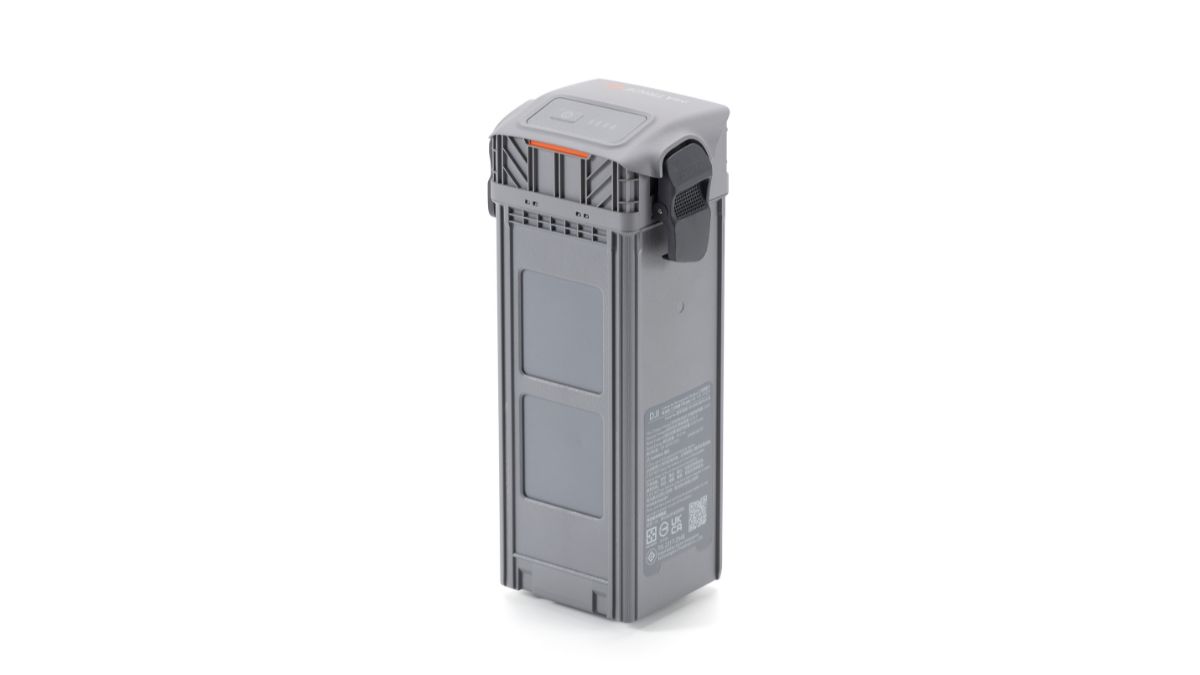
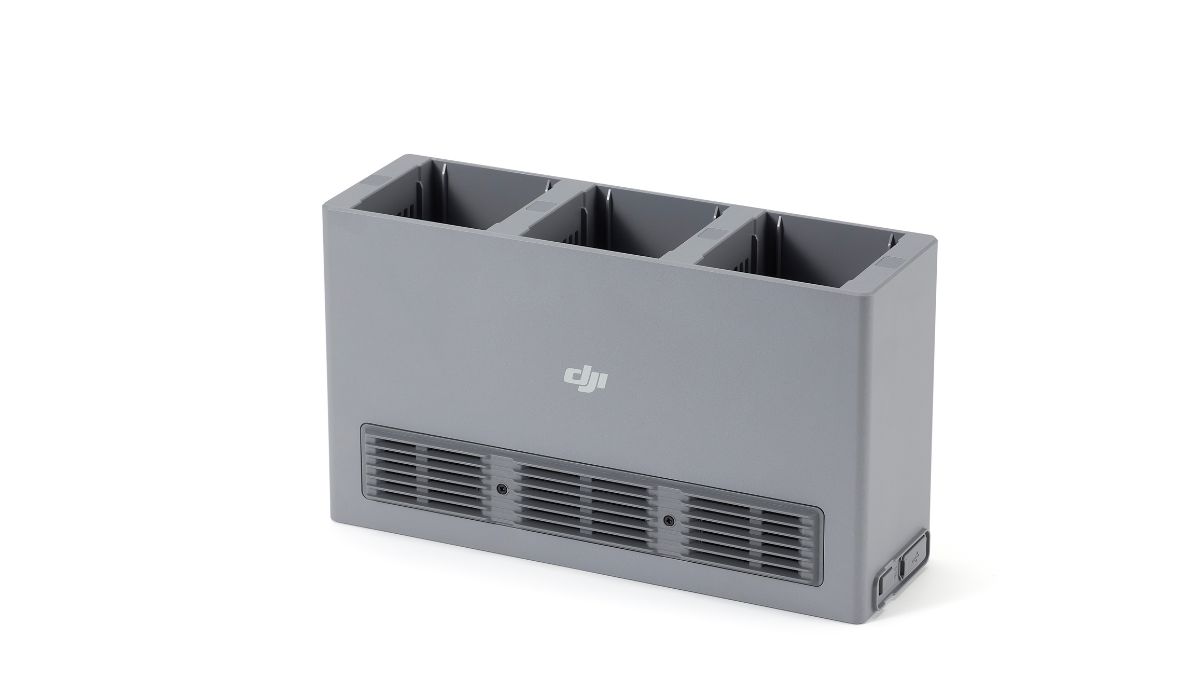
Maximum flight time reaches 59 minutes and top speed 23 m/s, covering more open water per battery on a search pattern or a coastal inspection run, fewer returns to the vessel or shore to swap packs. Video transmission reaches up to 20km under CE compliance, the figure that applies across the UK and EU; this is the transmission system's own range, not a beyond-visual-line-of-sight authorisation, so a mission still needs to sit within whatever VLOS or BVLOS permission the operator actually holds. A 515W Charging Hub, sold separately, speeds battery turnaround between flights on a multi-sortie day, relevant when a vessel's own deck time for recovery and relaunch is limited.
Awareness of Other Aircraft Near Busy Shipping Lanes
Built-in ADS-B and Remote ID receivers add awareness of nearby crewed and uncrewed aircraft directly into the Matrice 5T's own sensing, relevant near a busy shipping lane, a port approach or a coastguard helicopter working the same incident. This runs as part of the aircraft's standard sensing rather than a separate device a crew has to carry and monitor on top of flying the mission itself.
What This Means in the Field
The Matrice 5T's case for maritime work rests on the same airframe covering deck-based deployment, long-range thermal and visual search, and direct scene communication, without needing a separate aircraft for land-based utility or public safety work elsewhere in the same fleet. The gaps worth flagging before committing to routine sea-going use are DJI's own: no published deck-motion tolerance figure, and no marine-specific corrosion certification beyond the standard IP55 rating. Neither rules the aircraft out for maritime work, but both are worth confirming directly against a specific vessel and operating pattern rather than assumed.
Common Questions
Not that we've found on DJI's own documentation. Call the team to talk through a specific vessel and sea condition before relying on routine deck landing in open water.
Not specifically. Its IP55 rating covers dust and water-jet ingress, confirmed at the same level as the rest of the Matrice 5 generation, but DJI doesn't publish a dedicated marine corrosion certification alongside it.
Not confirmed. DJI's own FAQ states both are exclusively compatible with the Matrice 5T, so check with the team before ordering for a different airframe.
No, that figure is the transmission system's own range, not a flight authorisation. Any BVLOS operation still needs to sit within whatever permission the operator actually holds.
Up to 3km, confirmed on DJI's own Matrice 5T specification page.