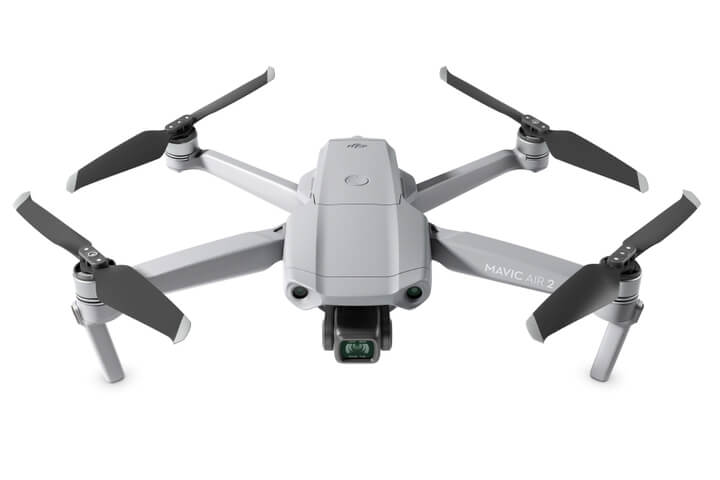
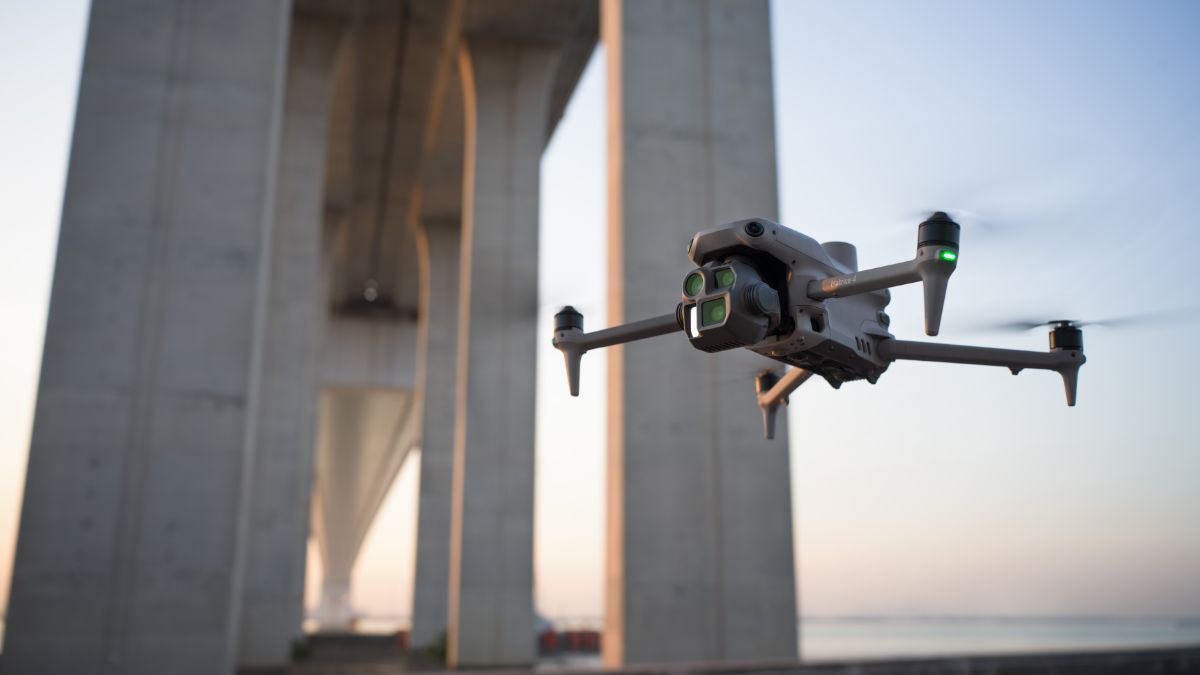
The Spec Comparison at a Glance
Spec | Matrice 4T | Mavic 3 Thermal |
|---|---|---|
Price | £5,910.00 (RTK built in) | £4,839.00 (RTK module sold separately, £570.00) |
Thermal camera | 640 x 512, uncooled VOx; high gain -20°C to 150°C (±2°C or ±2%), low gain 0°C to 550°C (±5°C or ±3%) | 640 x 512 at 30Hz, same dual-gain accuracy figures |
Wide camera | 1/1.3-inch CMOS, 48MP, electronic shutter only | 1/2-inch CMOS, 48MP, electronic shutter only |
Telephoto camera | 48MP, up to 16x digital / 112x hybrid zoom | 12MP, up to 56x hybrid zoom |
NIR auxiliary light | Yes | Not documented in DJI's own Mavic 3 Enterprise spec sheet |
Takeoff weight | 1,219g | 915g |
Max flight time | 49 min | 45 min (42 min with RTK module attached) |
RTK | Built into the airframe as standard | Separate module, £570.00, 24g, USB-C |
Thermal Performance Is Essentially Identical
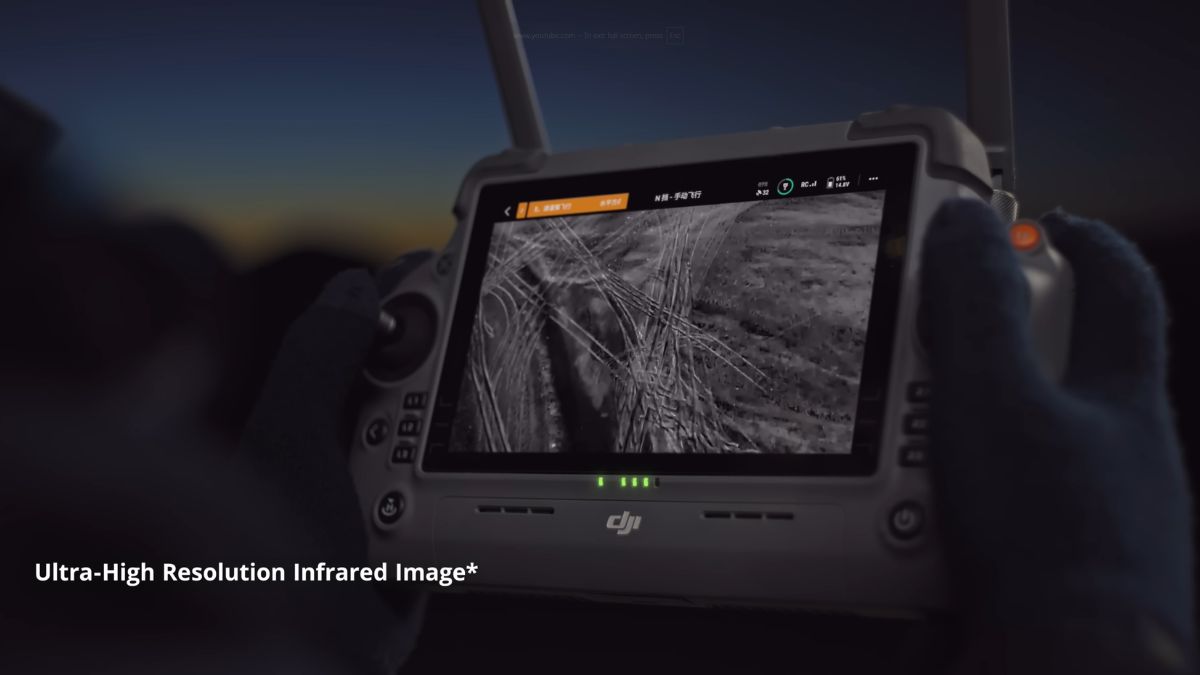
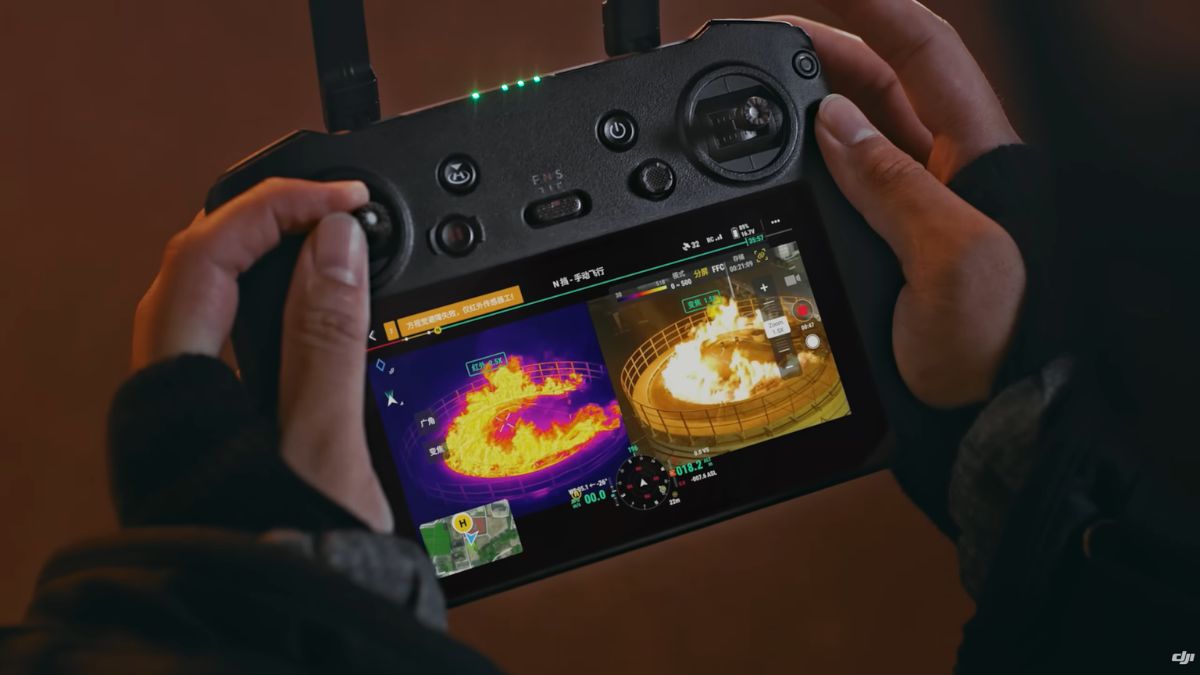
Both cameras share the same 640 x 512 resolution and the same two-gain accuracy structure: high gain from -20°C to 150°C at ±2°C or ±2% for everyday inspection temperatures, low gain extending to 0°C to 550°C at a coarser ±5°C or ±3% for genuinely hot subjects. Neither aircraft has a meaningful thermal advantage over the other, the decision here doesn't turn on the thermal sensor at all.
Where the Two Actually Differ
RTK is the structural split. The M4T has it built into the airframe from the start; the Mavic 3 Thermal needs a separate £570.00 module fitted before it reaches the same 1cm + 1ppm accuracy, which changes the real comparative cost once RTK is factored in for both. The M4T is documented with an NIR auxiliary light for illuminated night imaging; DJI's own Mavic 3 Enterprise spec sheet doesn't list that feature for the Mavic 3 Thermal.
Zoom range favours the Mavic 3 Thermal on paper, 56x hybrid against the M4T's 112x hybrid is actually the reverse, the M4T's telephoto reaches further despite the smaller headline number on the Mavic. Weight and portability favour the Mavic 3 Thermal clearly: 915g and a folding airframe against the M4T's 1,219g fixed Matrice platform.
Choosing Between the M4T and Mavic 3 Thermal
RTK included on the airframe without a separate module to manage, and a slightly longer reach on the telephoto, point toward the M4T for fixed-team inspection and survey-adjacent thermal work. Portability, single-operator quick deployment, and a lower entry price where RTK isn't needed on every flight point toward the Mavic 3 Thermal, particularly for search and rescue or emergency response teams carrying the aircraft on foot.
Once the RTK module's £570.00 is added to the Mavic 3 Thermal's price, the gap to the M4T narrows to roughly £500, worth factoring in before treating the Mavic as the meaningfully cheaper option for any job that actually needs RTK.
 Free Gifts Included
 Free Gifts Included
Common Questions
No, both use the same 640 x 512 sensor with identical high-gain and low-gain accuracy figures. The decision doesn't come down to thermal image quality.
No, it needs a separate £570.00 module. The M4T has RTK built into the airframe as standard.
The M4T, at up to 112x hybrid zoom against the Mavic 3 Thermal's 56x, despite the Mavic's larger-sounding headline resolution on its telephoto sensor.
Not documented on DJI's own Mavic 3 Enterprise spec sheet. The M4T's NIR auxiliary light is confirmed; the Mavic 3 Thermal's isn't listed as having the equivalent feature.
Only by around £500 once the £570.00 RTK module is added to its £4,839.00 price, against the M4T's £5,910.00 with RTK already included.