The Spec Comparison at a Glance
Spec | Matrice 4E | Mavic 3 Enterprise |
|---|---|---|
Price | £3,940.00 (aircraft, RTK built in, no base station) | £6,999.00 (DSS's only listed configuration, RTK Bundle, includes RTK module and D-RTK 2 Mobile Station) |
RTK | Built into the airframe as standard | Separate module required, 24g, USB-C |
Wide camera | 4/3-inch CMOS, 20MP, mechanical + electronic shutter | 4/3-inch CMOS, 20MP, mechanical + electronic shutter |
Medium tele camera | 1/1.3-inch CMOS, 48MP | None |
Telephoto camera | 1/1.5-inch CMOS, 48MP | 1/2-inch CMOS, 12MP, up to 56x hybrid zoom |
Takeoff weight | 1,219g | 915g |
Max flight time | 49 min | 45 min (42 min with RTK module active) |
Price Isn't a Clean Comparison as Listed
DSS's current catalogue lists the M4E at £3,940.00 as a standalone aircraft combo with RTK built in but no base station included. The Mavic 3 Enterprise is currently listed only as the £6,999.00 RTK Bundle, which folds in the RTK module, a D-RTK 2 Mobile Station and several software extras, there's no equivalent bare-aircraft listing to compare against the M4E's £3,940 figure directly. The fairer comparison is bundle to bundle: the M4E RTK Bundle at £5,999.00, which adds a D-RTK 3 station and similar extras, against the Mavic 3 Enterprise RTK Bundle at £6,999.00.
Camera Set: Three Lenses vs Two
Both aircraft carry an identical wide camera, 4/3-inch CMOS, 20MP with a genuine mechanical shutter, so mapping-grade image quality on the primary lens is the same either way. The M4E adds a third lens, a medium telephoto at 48MP, that the Mavic 3 Enterprise doesn't have at all. The Mavic 3 Enterprise's telephoto compensates with more reach, up to 56x hybrid zoom against the M4E's shorter zoom range, useful for inspection work where getting close physically isn't an option.

Weight and Portability
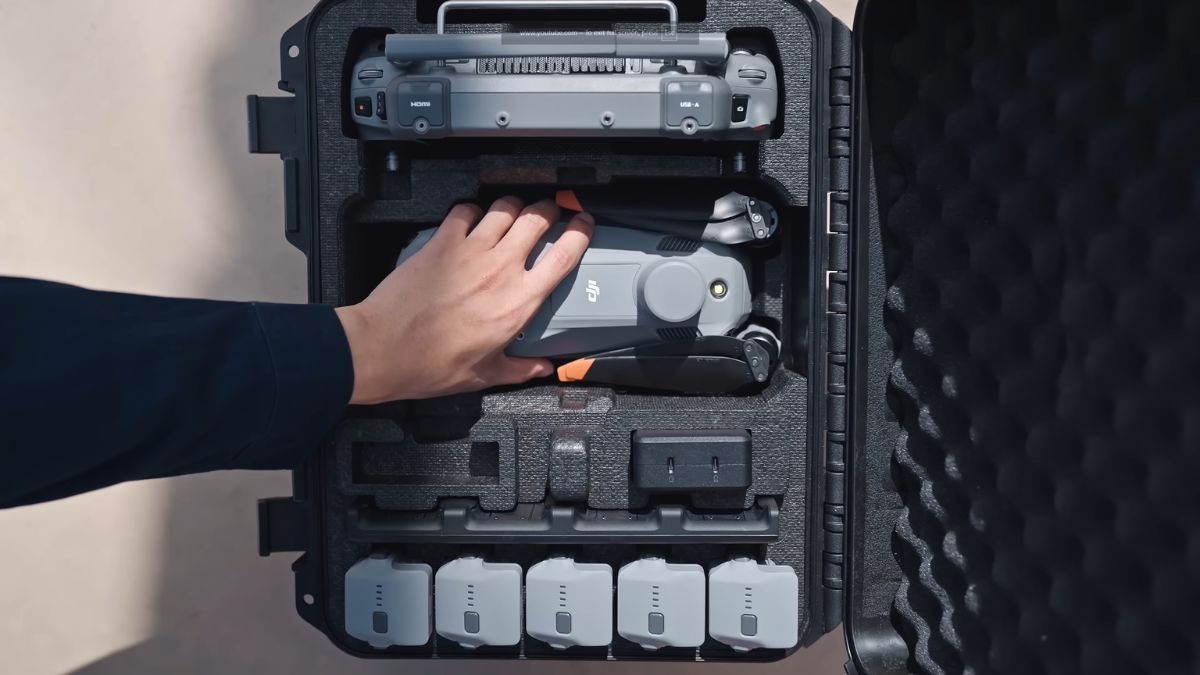
The Mavic 3 Enterprise's 915g against the M4E's 1,219g is a genuine difference in how each aircraft travels and deploys, not just a number on a spec sheet. DJI's Mavic 3 Enterprise line uses a folding arm design built for single-operator, quick-deployment work; the M4E, part of DJI's larger Matrice platform, doesn't fold in the same way. A team carrying the aircraft on foot to remote sites feels that 300g and the folding difference more than a team flying from a fixed vehicle-based setup.
Choosing Between the M4E and Mavic 3 Enterprise
Mapping and survey work that benefits from the M4E's third camera, and RTK included on the airframe without a separate module to fit and manage, points toward the M4E. Fieldwork where portability and quick single-operator deployment matter more than a third lens, inspection work relying on the longer zoom range, or a team not needing RTK on every flight and preferring to add the module only when a job calls for it, points toward the Mavic 3 Enterprise.
 Free Gifts Included
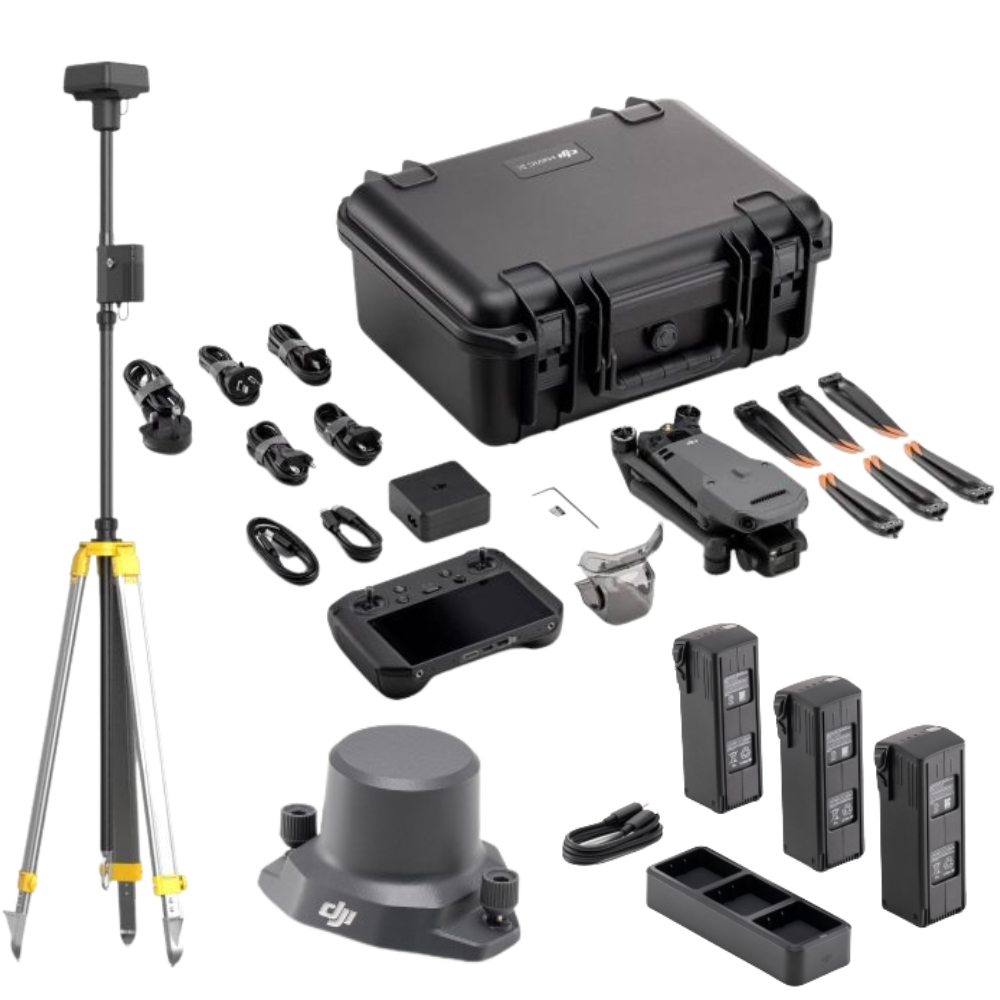
DJI Mavic 3 Enterprise RTK Bundle
The Ultimate Mapping Package · RTK Module, Battery Kit, D-RTK 2 Mobile Station & Tripod!

DJI Matrice 4E RTK Bundle
The Ultimate Mapping Package · D-RTK 3, Tripod & Four Batteries Included
Common Questions
No, it needs a separate RTK module fitted, a small USB-C add-on, to reach the same 1cm + 1ppm horizontal accuracy the M4E has standard on the airframe.
The Mavic 3 Enterprise, at 915g against the M4E's 1,219g, and its folding arm design suits single-operator quick deployment better than the M4E's fixed Matrice airframe.
Yes, both use an identical 4/3-inch, 20MP wide camera with a mechanical shutter. The M4E adds a third, medium telephoto lens the Mavic 3 Enterprise doesn't have.
Not directly as currently listed. The M4E is sold as a standalone aircraft at £3,940.00; the Mavic 3 Enterprise is only listed as the £6,999.00 RTK Bundle, so the fairer comparison is that bundle against the M4E RTK Bundle at £5,999.00.
The M4E, at 49 minutes against the Mavic 3 Enterprise's 45 minutes, or 42 minutes with its RTK module active.