
The Spec Comparison at a Glance
Spec | Matrice 4E | Matrice 350 RTK |
|---|---|---|
Price | £3,940.00 (integrated cameras included) | £8,389.00 Drone Only (no payload included), £10,959.00 Worry-Free Basic Combo (still no payload) |
Camera | Built in: 20MP wide, 48MP medium tele, 48MP telephoto | None included; payload bought separately (H20 series, H30 series, P1, L1, L2, S1 and others) |
Payload capacity | Fixed integrated payload only | Up to 2.7kg, supports up to three payloads mounted simultaneously |
Aircraft weight (no batteries) | N/A (sold as complete integrated unit) | Approx. 3.77kg |
Takeoff weight | 1,219g | Up to 9.2kg |
Max flight time | 49 min | 55 min (no payload, windless) |
RTK accuracy | 1cm + 1ppm horizontal, 1.5cm + 1ppm vertical | 1cm + 1ppm horizontal, 1.5cm + 1ppm vertical |
Transmission | O4 Enterprise | O3 Enterprise, 20km FCC / 8km CE |
IP rating | IP55 | IP55 |
Stock status | Live | Showing as discontinued on Drone Safe Store, both listings |
Integrated Payload vs Modular Platform
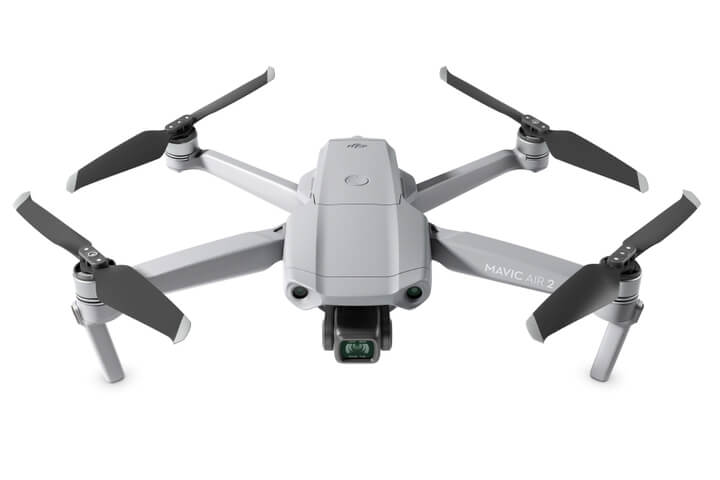
The M4E's three cameras are fixed to the airframe, there's no bay to swap a different sensor in. That's the trade the price reflects: a complete, ready-to-fly mapping aircraft for £3,940.00 with nothing further to buy for most survey and inspection work. The Matrice 350 RTK is built the opposite way, the airframe is a payload-carrying platform first, and the actual sensor, thermal, LiDAR, full-frame photogrammetry camera or a searchlight, gets chosen and fitted separately depending on the job.
That modularity is also what lets the M350 RTK carry up to three payloads at once, a camera and a spotlight together for a search operation, or a LiDAR unit and an RGB camera on the same flight for a combined point cloud and orthomosaic pass. The M4E's fixed camera set can't be reconfigured that way, it does one job well rather than several jobs interchangeably.


Flight Time, Weight and Vision System
The M350 RTK's 55-minute flight time (unloaded, windless) against the M4E's 49 minutes is a genuine difference, though it narrows once an actual payload's weight is added to the M350 RTK. The size gap is more clear-cut: 1,219g against a maximum takeoff weight of 9.2kg, the M350 RTK is built for heavier, more demanding payload work, not for the single-operator portability the M4E offers. Obstacle sensing on the M350 RTK covers 0.7 to 40m forward, backward, left and right, and 0.6 to 30m up and down, a wider detection envelope suited to the larger airframe operating in more complex industrial environments.
RTK Accuracy Is Identical
Both aircraft hold the same 1cm + 1ppm horizontal and 1.5cm + 1ppm vertical RTK accuracy, and both carry RTK built into the airframe as standard, no separate module to buy or fit on either one. Positioning precision isn't a factor in choosing between them, the decision comes down to payload flexibility and the work the aircraft needs to carry.
Choosing Between the M4E and Matrice 350 RTK
Mapping, survey and inspection work covered by a triple-camera set, at a lower entry price with nothing further to buy, points toward the M4E. Work that needs a specific payload the M4E doesn't carry, LiDAR, a full-frame photogrammetry sensor, a long-range thermal and zoom combination, or multiple payloads flown together, needs the modular platform the M350 RTK represents, whether that's this specific aircraft once its availability is confirmed, or a comparable payload-carrying platform in DJI's current range.

DJI Matrice 4E RTK Bundle
The Ultimate Mapping Package · D-RTK 3, Tripod & Four Batteries Included
Common Questions
No, neither listing on Drone Safe Store includes a payload. A camera, LiDAR unit or other sensor is chosen and bought separately.
Both its listings on Drone Safe Store currently show as discontinued. Worth confirming current stock directly before treating it as available.
Neither, both hold identical 1cm + 1ppm horizontal and 1.5cm + 1ppm vertical accuracy with RTK built into the airframe.
No, the M4E's camera set is fixed to the airframe. The Zenmuse L2 and other Zenmuse payloads are built for the modular Matrice 300/350 RTK platform.
Because its price is for the airframe alone. A working setup needs a payload added on top, and payloads like the Zenmuse P1 or H30T cost several thousand pounds each, on top of the £8,389.00 to £10,959.00 airframe price.