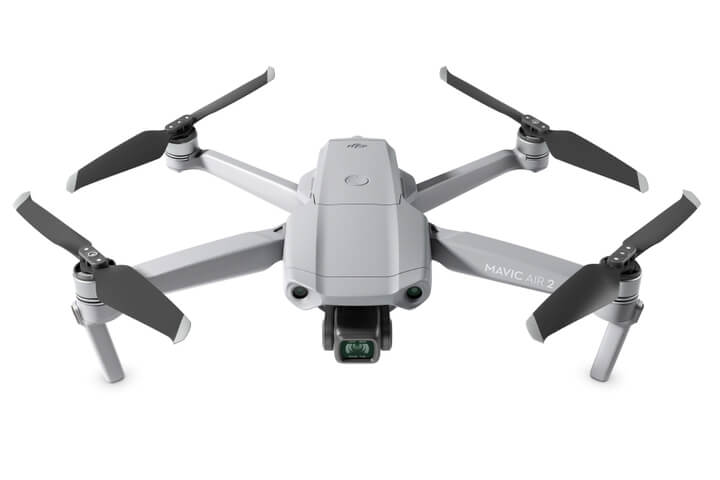
C0/UK0 vs C1/UK1 vs C2/UK2 at a Glance
Class | Weight limit | Max speed | Open subcategory | Remote ID required | Sound rating required |
|---|---|---|---|---|---|
C0 / UK0 | Under 250g | 19 m/s | A1 (over people) | Not mandated for this class | No |
C1 / UK1 | Under 900g (or under 80J impact energy) | 19 m/s | A1 (over people) | Yes | Yes |
C2 / UK2 | Under 4kg | 19 m/s, with a low-speed mode limiting it to 3 m/s | A2 with an A2 Certificate of Competence, A3 without | Yes | Yes |
What Actually Changes Between the Three
C0 is the lightest and least restricted of the three, a sub-250g aircraft with no low-speed mode requirement and no Remote ID mandate specific to the class itself. C1 raises the weight ceiling to 900g while keeping A1 access, over-people flight, but adds two things C0 doesn't need: a working Remote ID broadcast and a displayed sound rating. C2 raises the ceiling again to 4kg, and in exchange for that extra weight allowance it needs a low-speed mode capping the aircraft at 3 m/s whenever it's operated close to people, on top of the same Remote ID and sound rating requirements as C1.
The practical effect is a straight trade: more weight allowance buys more capability (larger sensor, better obstacle sensing, longer flight time) but adds compliance requirements the lighter class doesn't carry. A pilot choosing between a C1-marked sub-900g drone and a C2-marked sub-4kg drone isn't just choosing a weight bracket, they're choosing whether A1 or A2/A3 access fits the job.
Where C2's A2 Certificate of Competence Fits
A C2/UK2 aircraft flown without an A2 Certificate of Competence defaults to A3 rules, 50m minimum from uninvolved people, which rules out most residential or urban work. Holding the A2 CofC drops that minimum distance to 30m, or 5m in the aircraft's low-speed mode, opening up flights that A3 alone wouldn't allow. That's the main reason a C2-marked drone is worth the qualification for anyone doing regular work in populated areas, without it the class mark's extra weight allowance doesn't buy much extra access over a C1.
Registration Is Separate From the Class Mark
None of C0, C1 or C2 changes whether registration is needed, that's governed by the CAA's weight and camera rules, not the EU or UK class mark. Any drone weighing 100g or more needs a Flyer ID, and any drone weighing 250g or more, or a lighter drone fitted with a camera, also needs an Operator ID. A C1-marked drone at 900g and a C2-marked drone at 4kg both need the same Flyer ID and Operator ID as each other, the class mark only decides where each is allowed to fly, not whether it needs registering.
Choosing Between Them
C0 suits the lightest, most casual use, flying close to people with the fewest compliance requirements attached. C1 is the practical choice for a serious camera drone that still needs A1-level access over people, at the cost of Remote ID and a sound rating. C2 makes sense when the job genuinely needs the extra weight allowance, a larger sensor, longer flight time or a heavier payload, and the A2 CofC is either already held or worth obtaining for the access it unlocks.
Common Questions
Yes, until 31 December 2027 the EU C-class marks are recognised as equivalent to their matching UK class, C1 as UK1, C2 as UK2, and so on.
Not as a requirement of the C0 class itself, though separate Remote ID rules apply to some aircraft by weight and camera fitment regardless of class mark, covered in our UK Drone Laws 2026 guide.
No, C2/UK2 access sits in A2 (with an A2 Certificate of Competence) or A3 (without one), not A1. A1 access is limited to C0/UK0 and C1/UK1.
Usually, the higher weight ceiling allows for a larger sensor or more onboard systems, but it comes with a low-speed mode requirement C1 doesn't carry, and A2/A3 access rather than A1 unless an A2 CofC is held.
Yes, if it weighs 100g or more, which covers the great majority of camera-equipped sub-250g drones on the market. Registration is governed separately from the class mark.