What NTRIP Actually Is
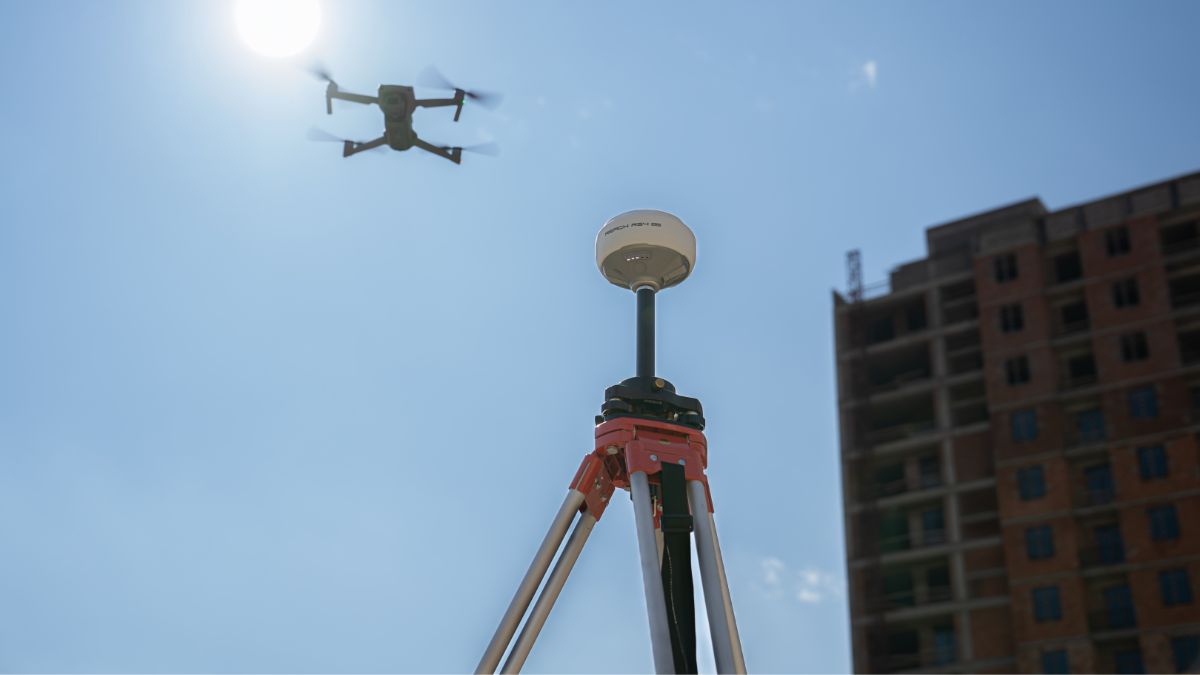
NTRIP, Networked Transport of RTCM via Internet Protocol, carries the same RTCM3 correction messages a physical base station broadcasts over LoRa or UHF, sent over a mobile data or WiFi connection instead. A caster server hosts the correction stream; the receiver connects to it as a client and requests a specific mount point.
Most current UK services use Virtual Reference Station (VRS) technology rather than a single fixed base. A network of physical reference stations computes a virtual correction point at the rover's exact location, so accuracy stays consistent across the coverage area rather than degrading the further the rover sits from the nearest physical station.

Connecting a Reach Rover to an NTRIP Service
In Emlid Flow, GNSS settings for NTRIP work best set to kinematic positioning mode, a 15 degree elevation mask, a 35 degree SNR mask, all satellite systems enabled, and a 5 Hz update rate. Internet access reaches the receiver either through Bluetooth tethering to the controlling phone, the simplest option, or through a SIM card, WiFi or hotspot connection on the receiver itself.
Under Correction input, adding an NTRIP profile takes the caster address, port (2101 is the common default), username, password and mount point from the service provider. VRS services also need "Send receiver's position to the provider" enabled, since the virtual station is computed from that position.
Once saved, the receiver shows a waiting-for-corrections notification until the link connects, then progresses through the same SINGLE, FLOAT and FIX states covered in our base and rover setup guide. A clear view of the sky, at least 30 degrees above the horizon, matters as much here as it does for a radio-linked rover.
UK NTRIP Options for Emlid Receivers
Emlid Corrections | RTK Network Subscription (Drone Safe Store) | |
|---|---|---|
First year | Free with any current Reach receiver (RS4 Pro, RS4, RX2, RS3, RX, RS2/RS2+) | Not included; purchased separately |
Renewal price | $699/year or $1,199 for three years, billed directly by Emlid in US dollars | £1,080.00/year or £180.00 for 30 days |
Accuracy | 1 to 2cm | 1.5cm, EU certified |
Coverage | United States, UK, Europe, Australia and New Zealand | 25+ European countries, 2,000+ base stations |
Device compatibility | Emlid Reach receivers only | Any brand of GNSS receiver |
Both use VRS technology and both work without a physical base station. The main differences are renewal pricing and currency, and whether the subscription is tied to Emlid hardware specifically or works across brands.
Subscription Cost Against Running Your Own Base
A base station removes the recurring cost entirely, at the price of the hardware itself and dependence on radio range rather than network coverage.
Reach RS3 as a base | Reach RS4 as a base | Ongoing subscription | |
|---|---|---|---|
Upfront cost | £2,699.00 | £3,599.00 | £0 |
Annual cost after year one | £0 | £0 | £1,080.00 (DSS) or roughly $699 (Emlid) |
Coverage dependency | Radio range (LoRa or UHF), not internet | Radio range (LoRa or UHF), not internet | Mobile data or WiFi required at the rover |
At DSS subscription pricing, the RS3's purchase price equals roughly two and a half years of renewals; the RS4's equals roughly three and a third years. Both figures assume the receiver is otherwise idle when not running as base; when it is also used as a rover or for GCP work on the same days, the equivalent period is shorter still.
Choosing Between Them
A network subscription suits sites with reliable mobile coverage and jobs that don't run long enough to make ownership worthwhile, or teams working across many sites where carrying a second receiver isn't practical.
An owned base suits remote sites without reliable coverage, or repeat work at the same location over multiple years, where the radio link's independence from network signal matters more than the lower upfront cost of a subscription.
Emlid Corrections suits an all-Emlid fleet already invested in Reach receivers. The DSS RTK Network Subscription suits a mixed fleet, or UK-priced billing without a currency conversion on renewal.
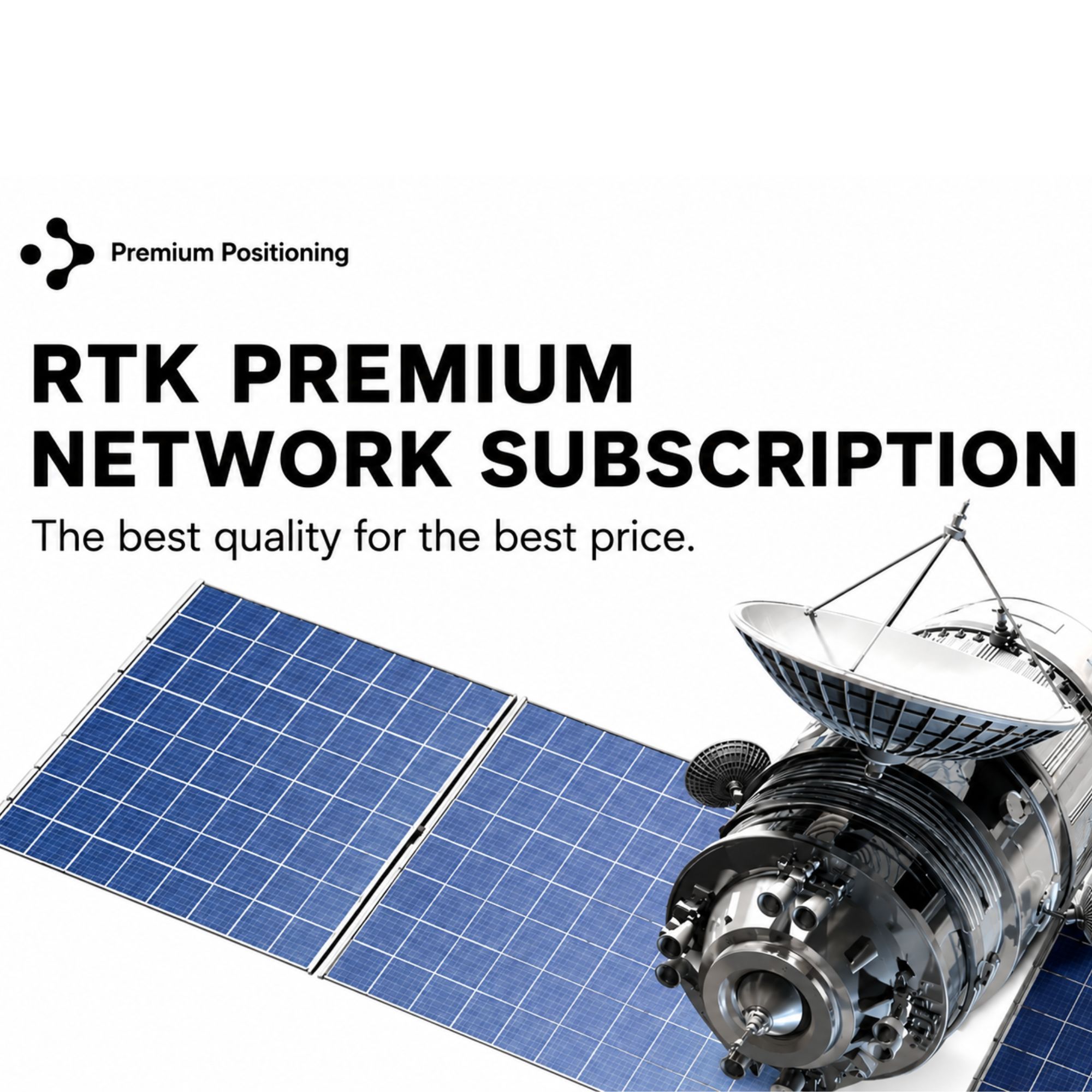
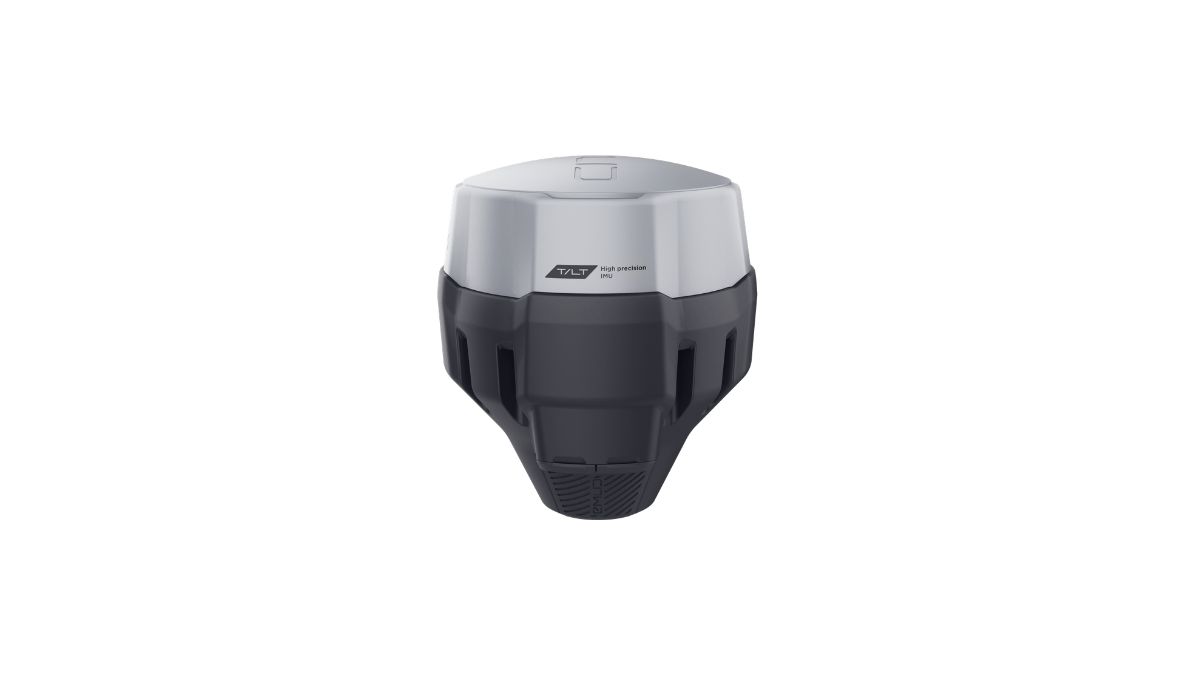
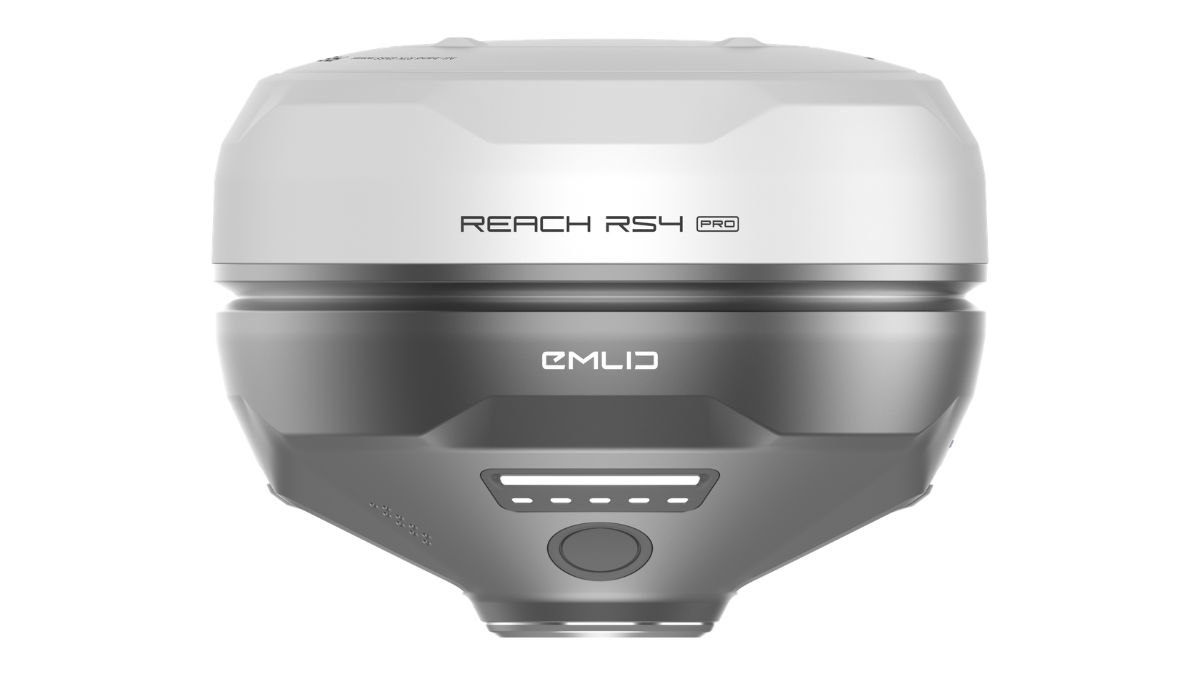
RTK Network Subscription - 1Y Unlimited
More than 2000 Base Stations · Accuracy of 1.5cm with EU Certification
 Free Gifts Included

 Free Gifts Included
Common Questions
No. Bluetooth tethering to the controlling phone's data connection is the simplest method and needs no SIM in the receiver itself.
Yes. It's built to work with any brand of compatible GNSS device, unlike Emlid Corrections, which is tied to Reach receivers.
Emlid bills the renewal directly, and their pricing is set in USD regardless of region. The first year is free with any current receiver either way.
No. Both services need an active internet connection at the rover, whether through Bluetooth-tethered mobile data, a SIM in the receiver, or WiFi. A physical base over LoRa or UHF is the option for sites without coverage.
Close to it. VRS computes a virtual station at the rover's own position rather than relying on the nearest physical base, so accuracy stays more consistent across the network than it would with a single fixed station.