The Spec Comparison at a Glance
Spec | Zenmuse L3 | Zenmuse L2 |
|---|---|---|
Price | £13,150.00 | £11,341.00 |
Compatible aircraft | Matrice 400 only | Matrice 400, Matrice 350 RTK, Matrice 300 RTK (requires DJI RC Plus) |
Weight | 1.60kg (without gimbal connector) | 905g ±5g |
Detection range | 700m @350kHz/10% reflectivity, 950m @100kHz/10% reflectivity, up to 2000m at 80% reflectivity | 450m @50% reflectivity, 250m @10% reflectivity, 500m maximum |
Raw ranging accuracy | ±10mm absolute, under 5mm repeatability (1σ) | 2cm @150m (RMS, 1σ) |
Point cloud accuracy | 3cm vertical / 4cm horizontal @120m; 5cm vertical / 7.5cm horizontal @300m (RMSE) | 4cm vertical / 5cm horizontal @150m (M350 RTK, RTK FIX) |
Returns | 4, 8 or 16, depending on pulse frequency | Up to 5 |
Point cloud rate | Pulse frequency 100kHz to 2000kHz | Up to 1,200,000 points/second (multiple return) |
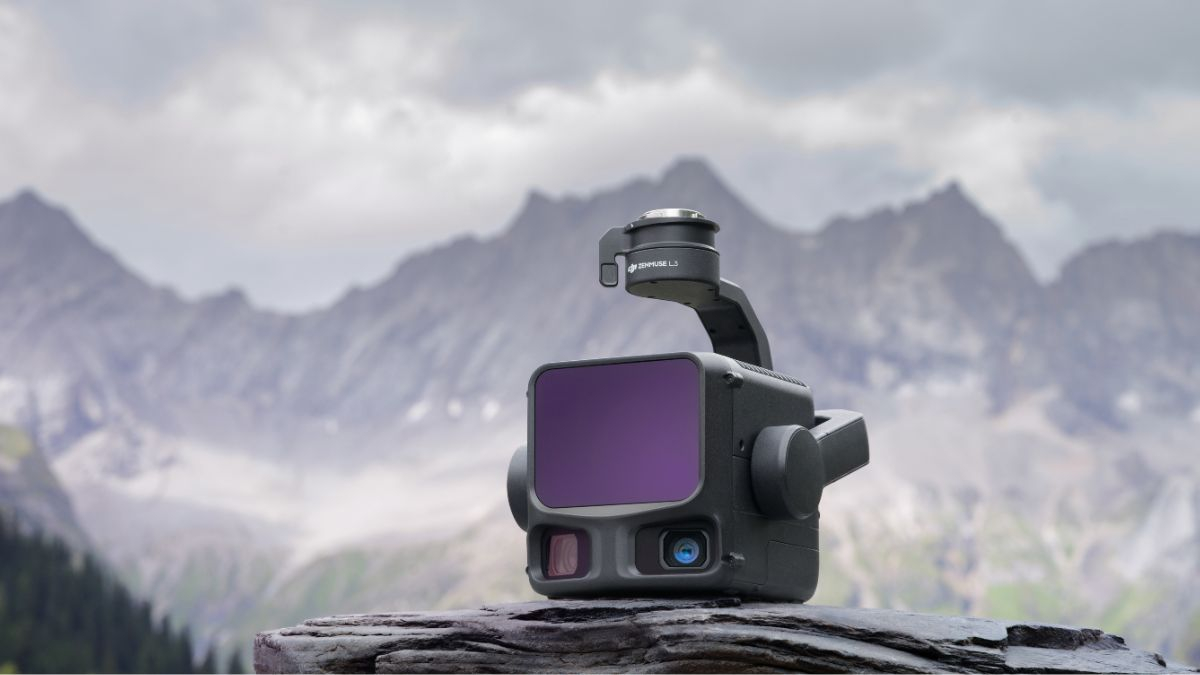
RGB camera | Dual 100MP/25MP cameras, 107° combined horizontal FOV | Single 20MP camera, 84° FOV, f/2.8-f/11 |
Scanning modes | Linear, Star-Shaped, Non-Repetitive | Repetitive, Non-Repetitive |
IP rating | IP54 | IP54 |
Power draw | 64W typical, 100W max | 28W typical, 58W max |
Aircraft Compatibility Is the First Filter
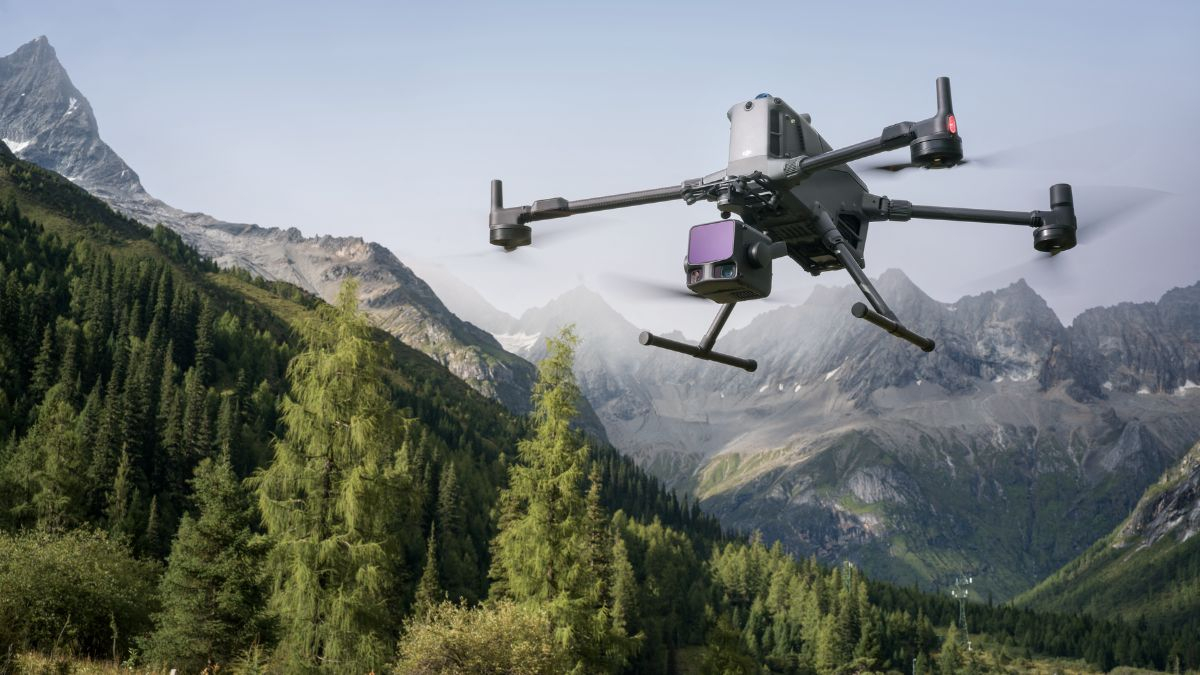
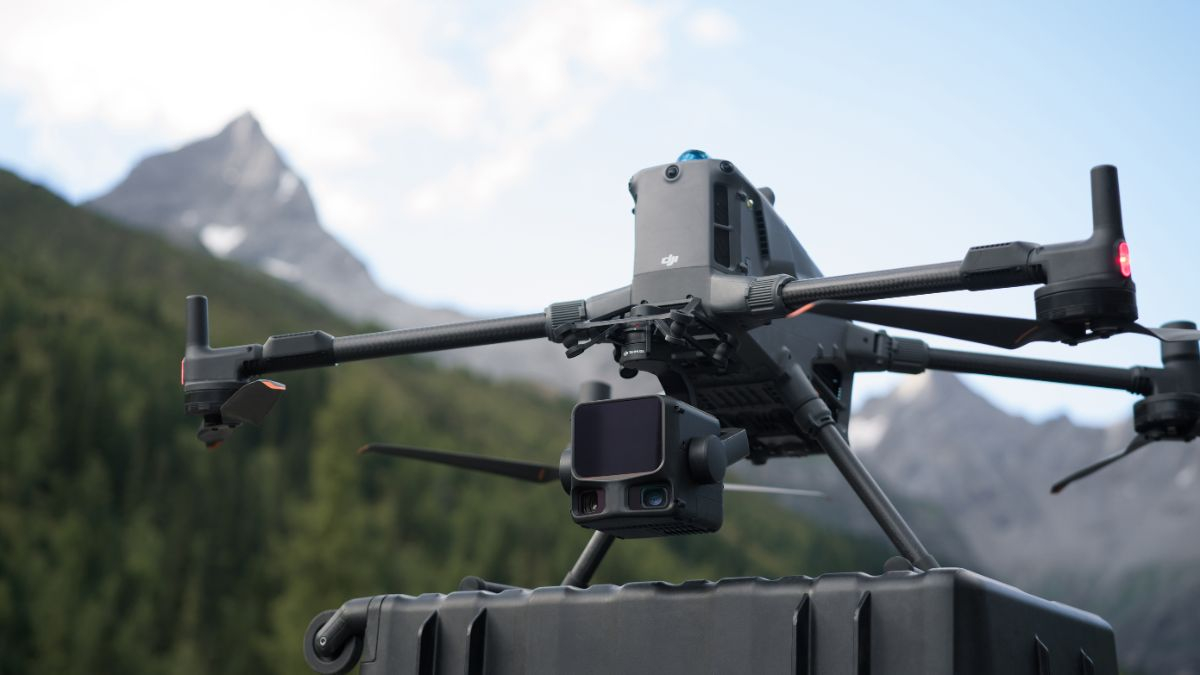
The L3 mounts exclusively to the Matrice 400, DJI doesn't list it as compatible with the Matrice 4 Series, Matrice 350 RTK or Matrice 300 RTK. The L2 covers more ground, it works on the Matrice 400, the Matrice 350 RTK and the Matrice 300 RTK, the last requiring a DJI RC Plus controller rather than the standard remote. For an operation with an existing M350 RTK or M300 RTK fleet and no plan to buy an M400, the L3 simply isn't an option regardless of budget.
Detection Range Isn't Close
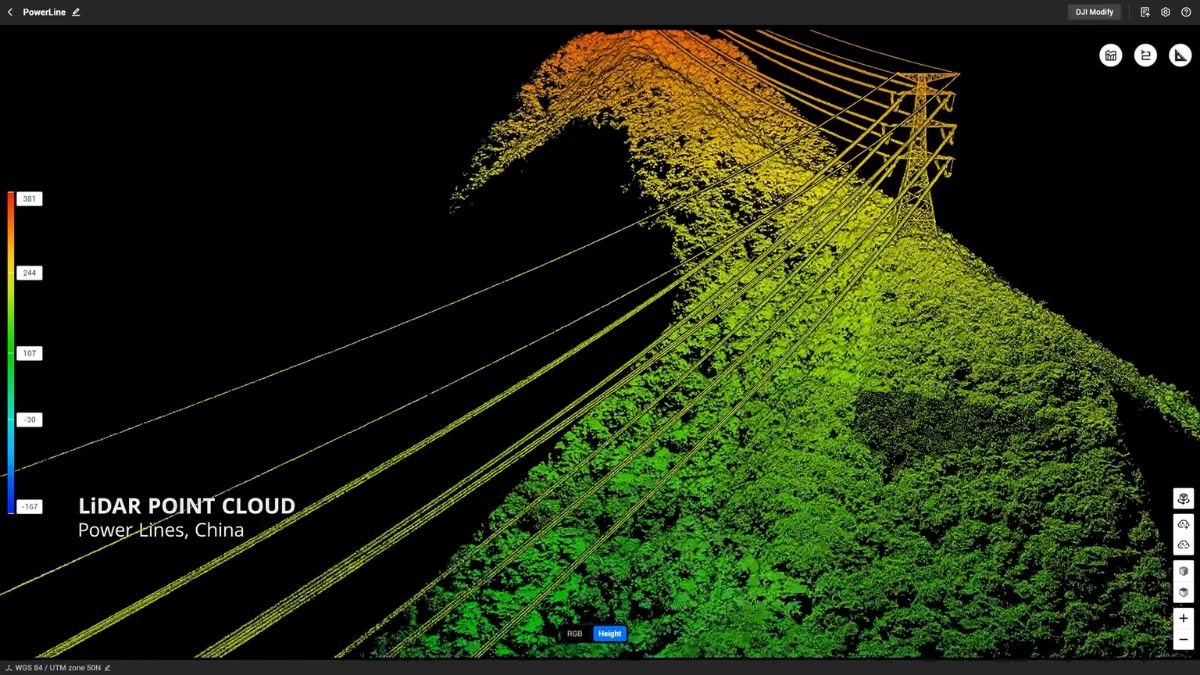
700m at 10% reflectivity and 350kHz pulse frequency, extending to 950m at 100kHz, is roughly double the L2's 450m at 50% reflectivity and well beyond its 500m maximum. In practical terms, the L3 can stand off further from a corridor, powerline or structure while still returning usable point density, reducing how many passes a long linear survey needs. DJI's own figures put the L3's best-case range at up to 2000m at 80% reflectivity, a condition unlikely on most real targets but indicative of the sensor's headroom over the L2.
Point Cloud Accuracy and Camera Resolution Both Favour the L3
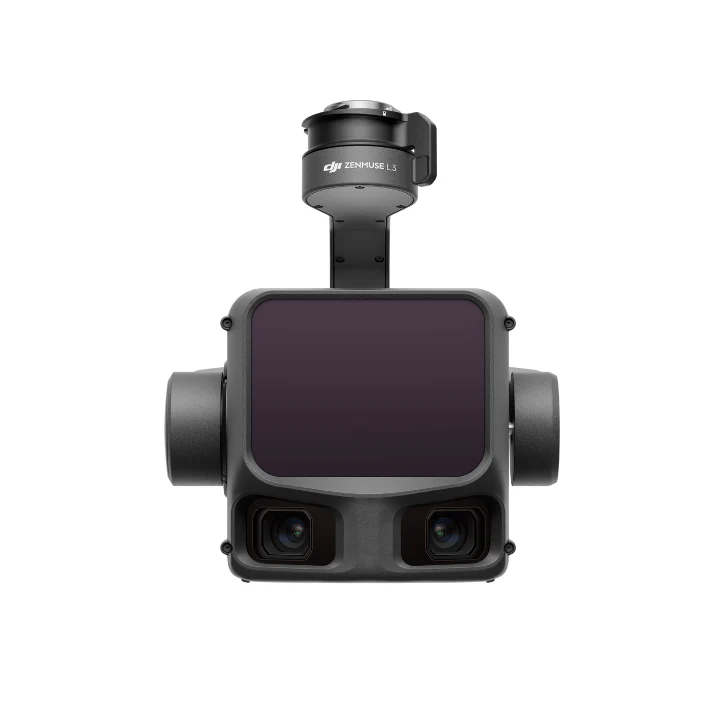
At comparable altitudes the L3 edges out the L2 on point cloud accuracy, 3cm vertical and 4cm horizontal at 120m against the L2's 4cm vertical and 5cm horizontal at 150m, though the two figures were captured at different altitudes so aren't a perfectly matched test. The bigger practical gap is the camera: the L3 carries two 100MP Micro Four Thirds sensors combining for a 107° horizontal field of view, against the L2's single 20MP camera. For work that pairs the point cloud with high-resolution imagery, orthomosaics, texture mapping, asset photography alongside the survey data, the L3's camera does meaningfully more without a second payload swap.
Where the L2 Still Makes Sense
Beyond the £1,809.00 saving, the L2's broader aircraft compatibility is the real reason to choose it over the L3. An operator running a Matrice 350 RTK or Matrice 300 RTK fleet gets a working LiDAR payload today rather than needing to buy into the M400 platform first. For general vegetation-penetration mapping, corridor work within the L2's 450m range and standard topographic surveys, its accuracy already sits within the tolerance most survey specifications call for.
Choosing Between the L3 and L2
Long-range corridor and powerline work, jobs needing standoff distance beyond 450m, or a project where the payload's own high-resolution imagery replaces a separate photogrammetry flight, points toward the L3, provided the aircraft is or will be a Matrice 400. An existing Matrice 350 RTK or Matrice 300 RTK fleet, or general survey work that doesn't need the L3's extended range, is well served by the L2 at the lower price.
 Free Gifts Included
Common Questions
No, DJI lists the L3 as compatible with the Matrice 400 only. The L2 covers those older airframes instead.
The L3, up to 950m at 10% reflectivity and 100kHz pulse frequency against the L2's 500m maximum, roughly double the practical range.
Slightly, 4cm vertical and 5cm horizontal at 150m against the L3's 3cm vertical and 4cm horizontal at 120m, but both sit within the tolerance most survey work specifies.
Two 100MP sensors combining for a 107° field of view, against the L2's single 20MP camera, useful where high-resolution imagery needs to accompany the point cloud without a separate flight.
No, DJI requires a DJI RC Plus controller for the L2 on a Matrice 300 RTK. The Matrice 400 and Matrice 350 RTK don't carry that same requirement.