The Spec Comparison at a Glance
Spec | Dock 3 | Dock 2 |
|---|---|---|
Price (Dock Only) | £10,860.00 | £6,920.00 |
Compatible aircraft | Matrice 4D, Matrice 4TD | Matrice 3D, Matrice 3TD |
Weight (without aircraft) | 55kg | 34kg |
Dimensions, cover open | 1760×745×485mm | 1228×583×412mm |
Dimensions, cover closed | 640×745×770mm | 570×583×465mm |
IP rating | IP56 | IP55 |
Operating temperature | -30°C to 50°C (pre-heated at the cold end) | -25°C to 45°C |
Max landing wind speed | 12 m/s | 8 m/s |
Max operating altitude | 4500m | 4000m |
Charging time | 27 min (15% to 95%) | 32 min (20% to 90%, 25°C) |
Backup power | 12Ah lead-acid battery, 4+ hours runtime | 5+ hours runtime |
Video transmission (unobstructed) | 25km FCC / 12km CE and UK | 15km FCC (O3 Enterprise) |
Vehicle-mounted deployment | Yes, DJI's first dock built for it | No, fixed installation only |
Aircraft hovering accuracy (RTK) | ±0.1m | ±0.1m |
Dock RTK base station accuracy | Not separately published by DJI | 1cm + 1ppm horizontal, 2cm + 1ppm vertical |
Vehicle-Mounted Deployment Is the Headline Difference
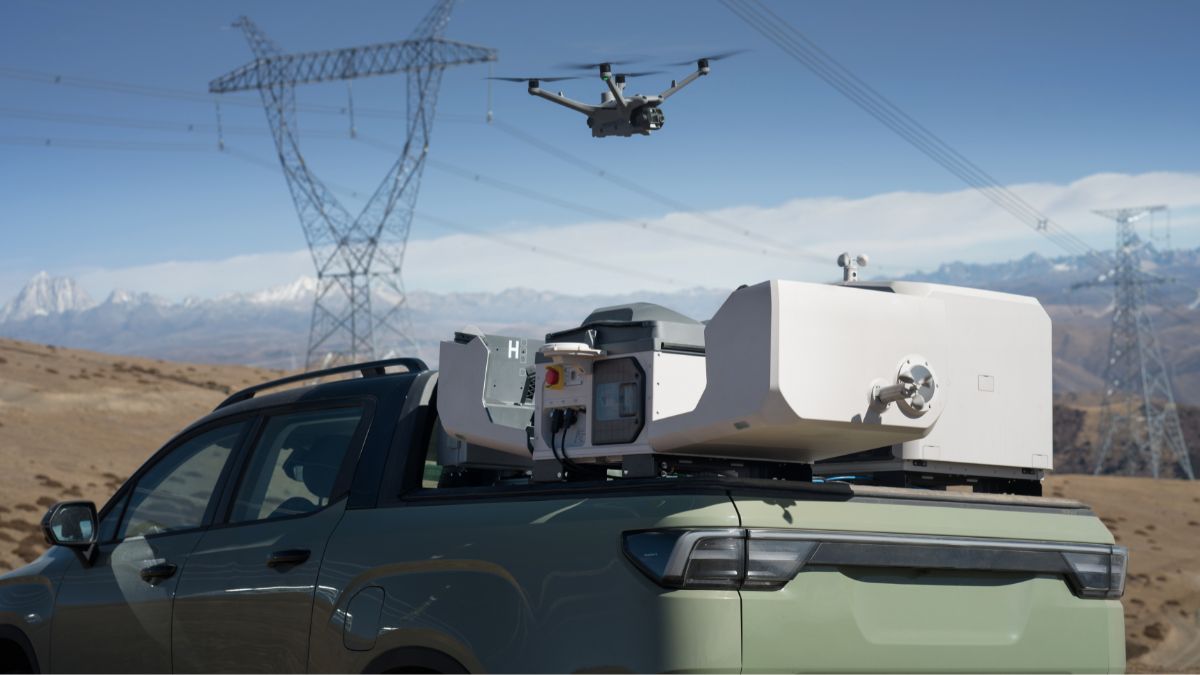
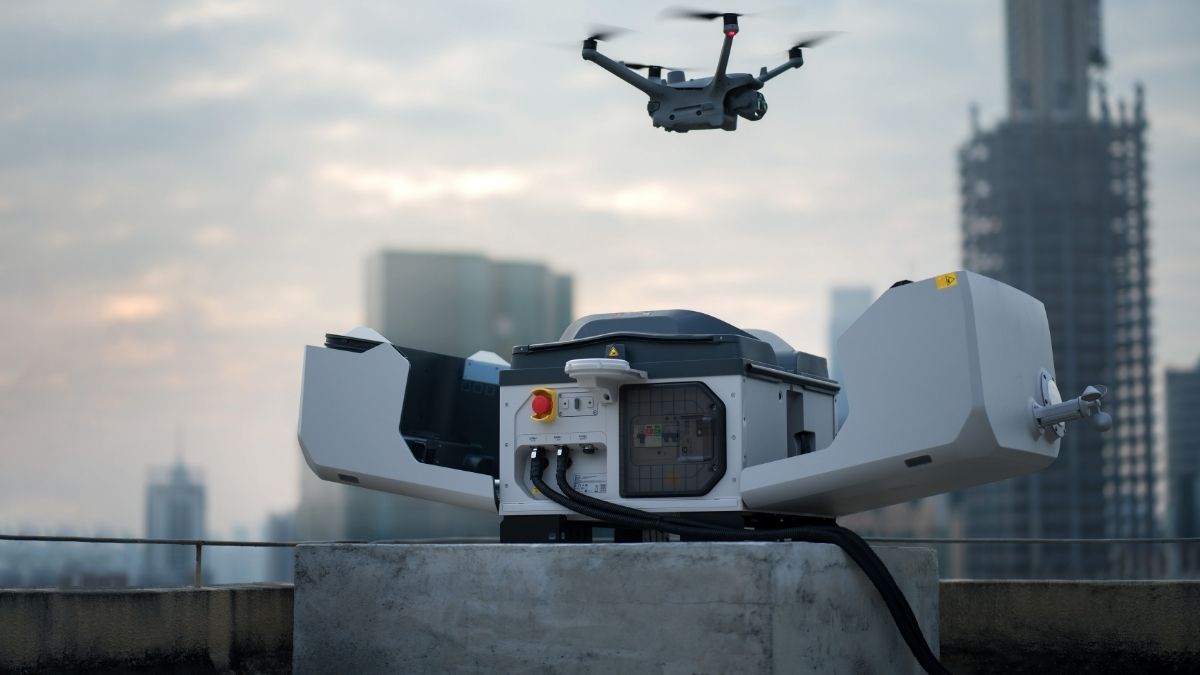
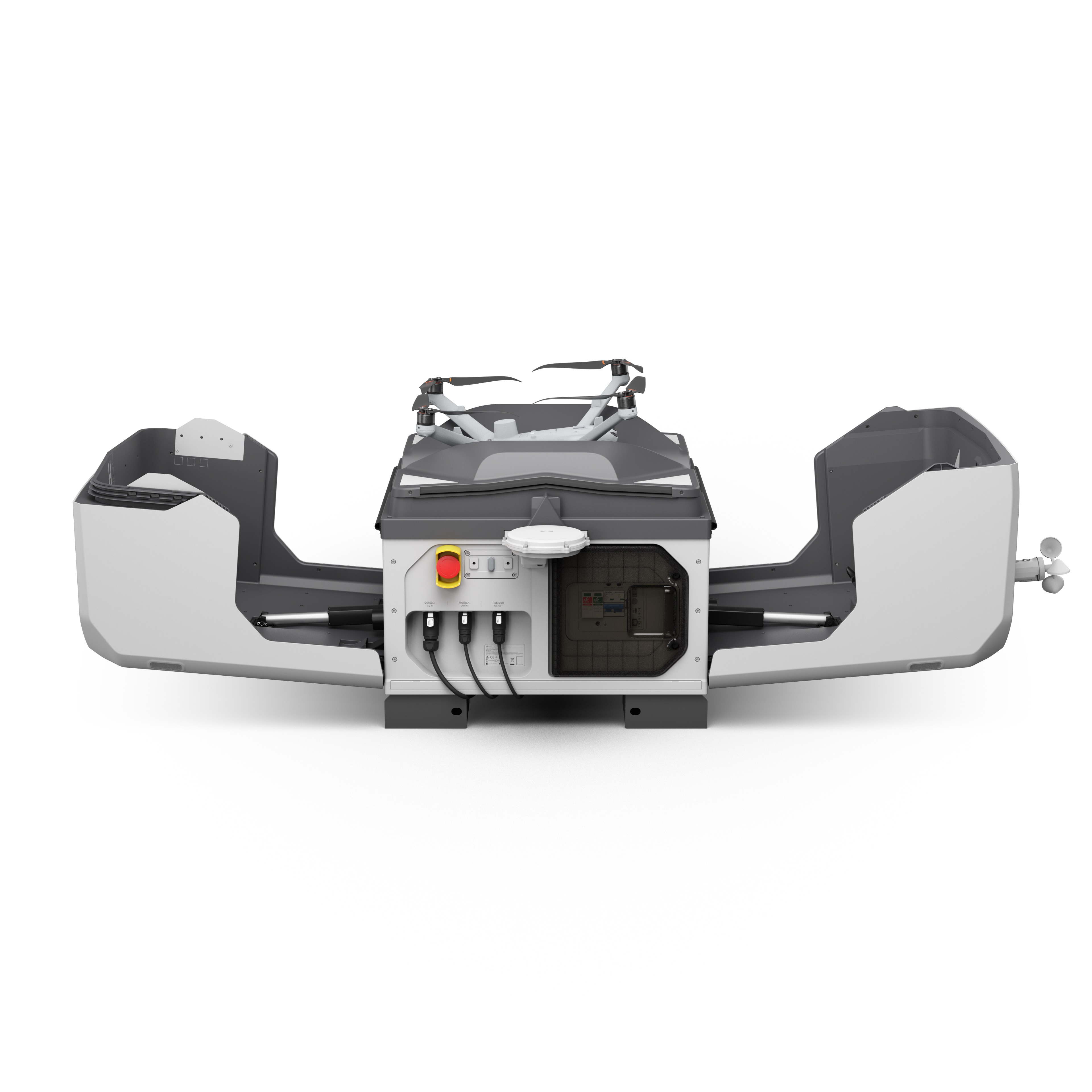
Dock 3 is the first DJI dock rated for mounting on a vehicle rather than a fixed pad, opening up temporary sites, mobile patrol routes and rapid redeployment between jobs without a permanent installation. DJI's own documentation sets real limits on this though: the vehicle has to stay stationary during flight operations, the parking slope has to stay under 3°, and a safety rope connecting the dock to the vehicle is required alongside compliance with local regulations. Dock 3 also supports two docks mounted on a single vehicle for continuous dual-aircraft rotation, useful where one aircraft needs to be airborne while the other charges rather than waiting out a full cycle.
Dock 2 has no equivalent mobile rating, it's built and certified for fixed-site installation only. For a permanent site that doesn't need relocating, that's not a limitation in practice, but it rules Dock 2 out for any operation planning to move the dock between locations on a schedule.
Different Aircraft, Not Interchangeable
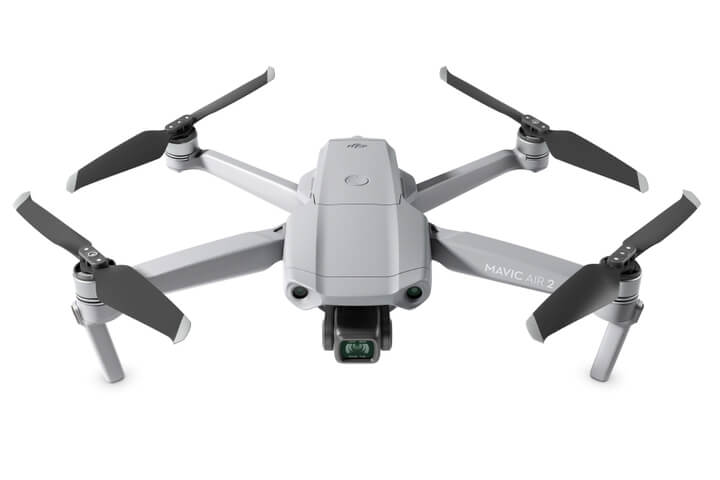
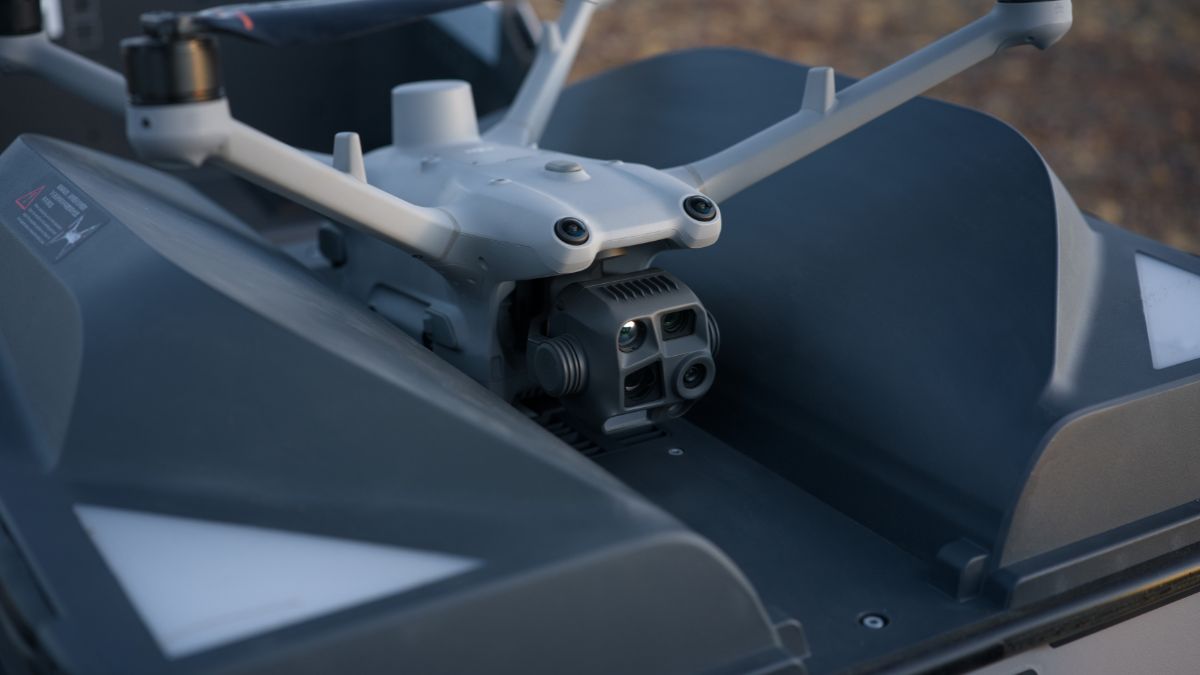
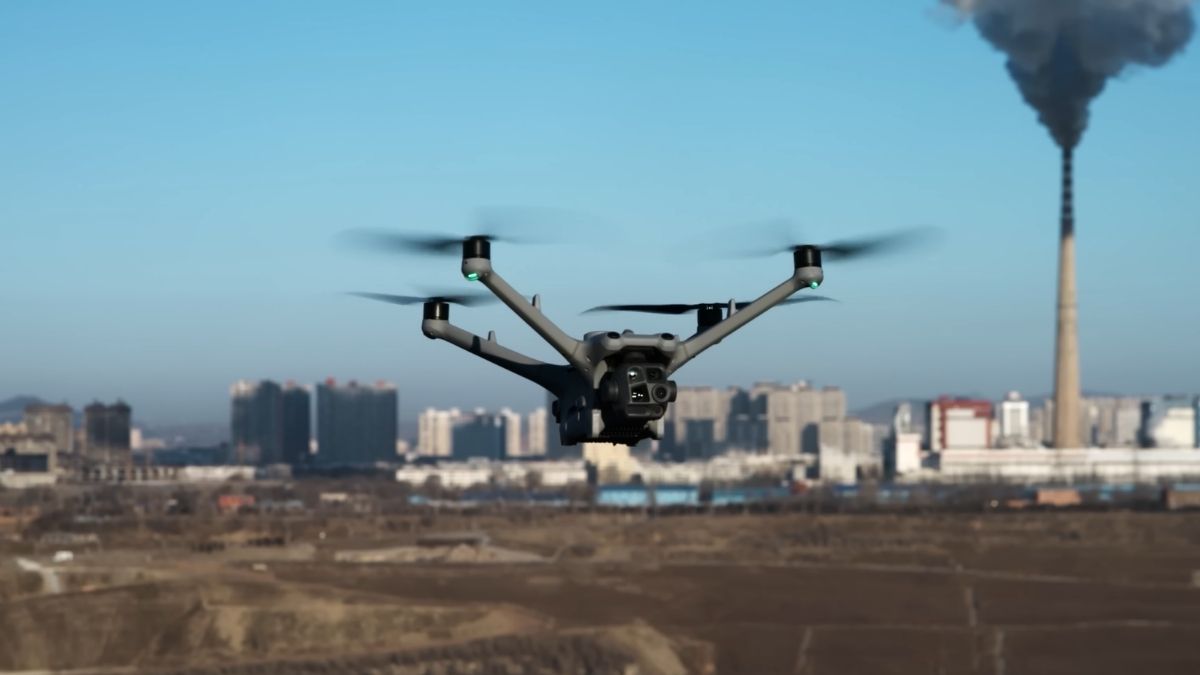
Dock 3 pairs exclusively with the Matrice 4D and Matrice 4TD, dock-specific airframes distinct from the standalone Matrice 4E and Matrice 4T covered in our other Matrice 4 Series comparisons, those don't fit this dock. Dock 2 pairs exclusively with the Matrice 3D and Matrice 3TD in the same way. Moving from a Dock 2 setup to a Dock 3 setup means buying the new dock and a new aircraft together, not adding a payload or a firmware update to existing hardware.
Weatherproofing, Range and Environmental Tolerance Favour the Dock 3
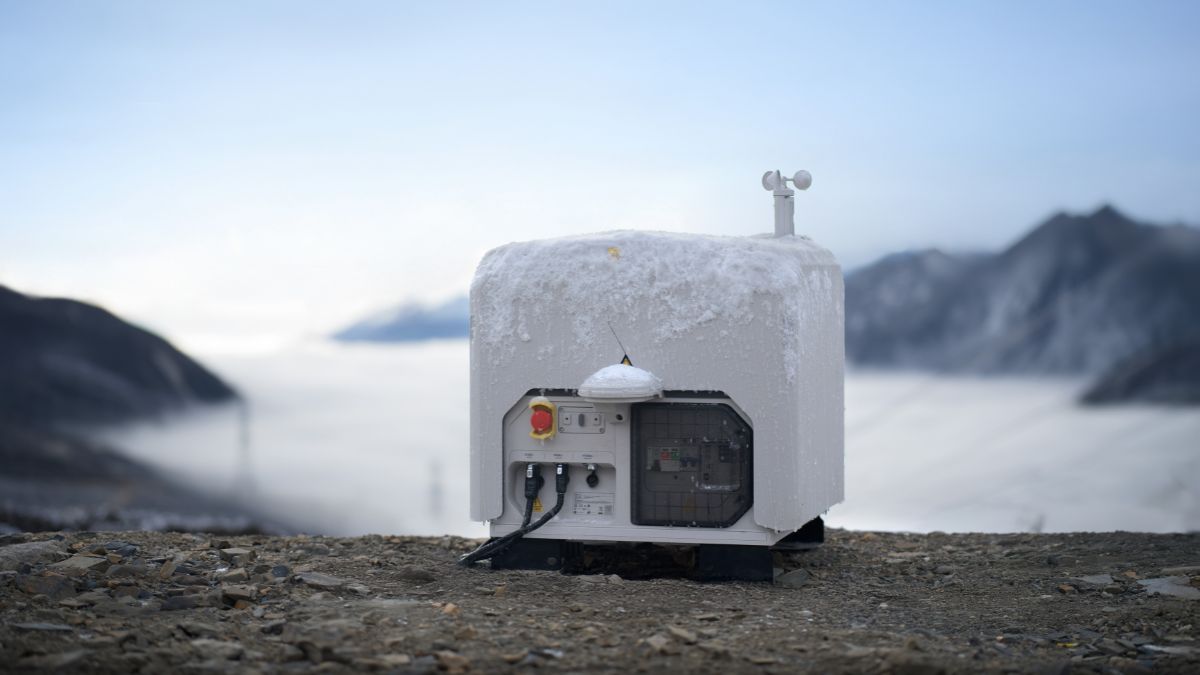
IP56 against Dock 2's IP55 gives the Dock 3 stronger protection against dust ingress specifically, relevant for sites with airborne debris, agricultural dust or construction grit rather than rain alone. The wider -30°C to 50°C operating range, against Dock 2's -25°C to 45°C, extends where the Dock 3 can sit unattended through a UK winter or a hot summer roof installation without a heated enclosure.
Base video transmission favours the Dock 3 too, 25km FCC and 12km CE and UK against the Dock 2's 15km FCC using the older O3 Enterprise system. Fitting the optional D-RTK 3 Relay Fixed Deployment Version to a Dock 3 setup extends video transmission range up to 25km even under UK and CE regulations in unobstructed, interference-free conditions, though DJI's own documentation notes multi-dock tasks aren't supported once that relay is in use.
Charging and Standby Power
Dock 3 charges its aircraft from 15% to 95% in 27 minutes; Dock 2 takes 32 minutes to go from 20% to 90%. Neither gap is large enough to change how many sorties a working day realistically supports, but the faster Dock 3 cycle matters more on the dual-dock, continuous-rotation deployments the platform is built for. Backup power runs longer on the Dock 3 too, a 12Ah lead-acid battery rated for over 4 hours against the Dock 2's 5+ hour figure as published on its own listing, both enough to keep monitoring and communications alive through a typical power outage rather than a multi-day one.
RTK Accuracy: What's Confirmed and What Isn't
Both aircraft families hover to the same ±0.1m RTK-assisted accuracy once a fix is locked, DJI publishes that figure for both the Matrice 3D/3TD and Matrice 4D/4TD. Dock 2's own built-in RTK base station carries a separately published accuracy figure, 1cm + 1ppm horizontal and 2cm + 1ppm vertical. DJI's Dock 3 specification sheet doesn't break out an equivalent base-station figure the same way, so that comparison is left open rather than assumed equal.
Choosing Between the Dock 3 and Dock 2
A mobile or temporary deployment, a site likely to move, or an operation wanting the option of two docks rotating aircraft from one vehicle points toward the Dock 3, the higher entry price buys capability the Dock 2 simply doesn't have. A permanent, fixed-site installation where the Matrice 3D or 3TD's camera and thermal capability already covers the job doesn't need to pay for mobility it won't use, and the Dock 2 covers that at £3,940.00 less.
 Free Gifts Included

 Free Gifts Included
DJI Dock 3 With DJI Matrice 4TD
Intelligent Recognition With AI · IP55 Waterproof Protection
 Free Gifts Included
Common Questions
No, the Dock 3 works exclusively with the dock-specific Matrice 4D and Matrice 4TD. The standalone Matrice 4E and Matrice 4T covered elsewhere on this site aren't dock-compatible aircraft.
No, DJI's own documentation requires the vehicle to stay stationary during flight operations, with the parking slope under 3° and a safety rope fitted. The vehicle-mounted rating covers moving the dock between deployment sites, not flying while the vehicle is in motion.
It extends video transmission range up to 25km even under UK and CE regulations in unobstructed conditions, and improves anti-interference performance for both video and satellite acquisition. DJI notes multi-dock tasks aren't supported while it's connected.
The Dock 3, IP56 against the Dock 2's IP55, a wider -30°C to 50°C operating range against -25°C to 45°C, and a higher 12 m/s max landing wind speed against 8 m/s.
No, since the aircraft aren't interchangeable between docks, moving from Dock 2 to Dock 3 means buying the new dock and a Matrice 4D or 4TD together rather than upgrading a payload or component on the existing setup.