The Spec Comparison at a Glance
Spec | Reach RX2 | Reach RS4 |
|---|---|---|
Price | £2,099.00 | £3,599.00 |
GNSS tracking | 672 channels, L1/L2/L5/L6 | 672 channels, L1/L2/L5/L6 |
RTK accuracy | 7mm + 1ppm horizontal, 14mm + 1ppm vertical | 7mm + 1ppm horizontal, 14mm + 1ppm vertical |
Tilt compensation | RTK + 2mm + 0.3mm per degree, no stated maximum tilt angle | 18mm accuracy at 30° tilt |
Battery (RTK rover use) | Up to 16 hrs, 7000mAh | 16 hrs, 5000mAh |
IP rating | IP68 | IP68 |
Operating temperature | -20°C to +65°C | -40°C to +65°C |
Connectivity | Bluetooth 4.2 only, phone-tethered for corrections | Built-in cellular modem (Nano-SIM), UHF 450MHz up to 2W, LoRa 915MHz up to 1W |
Base station capability | No, rover only | Yes, broadcasts over UHF or LoRa |
Raw data logging / PPK | No | Yes, 16GB internal storage |
Weight | 280g | 927g |
Rover-Only Is the Real Dividing Line
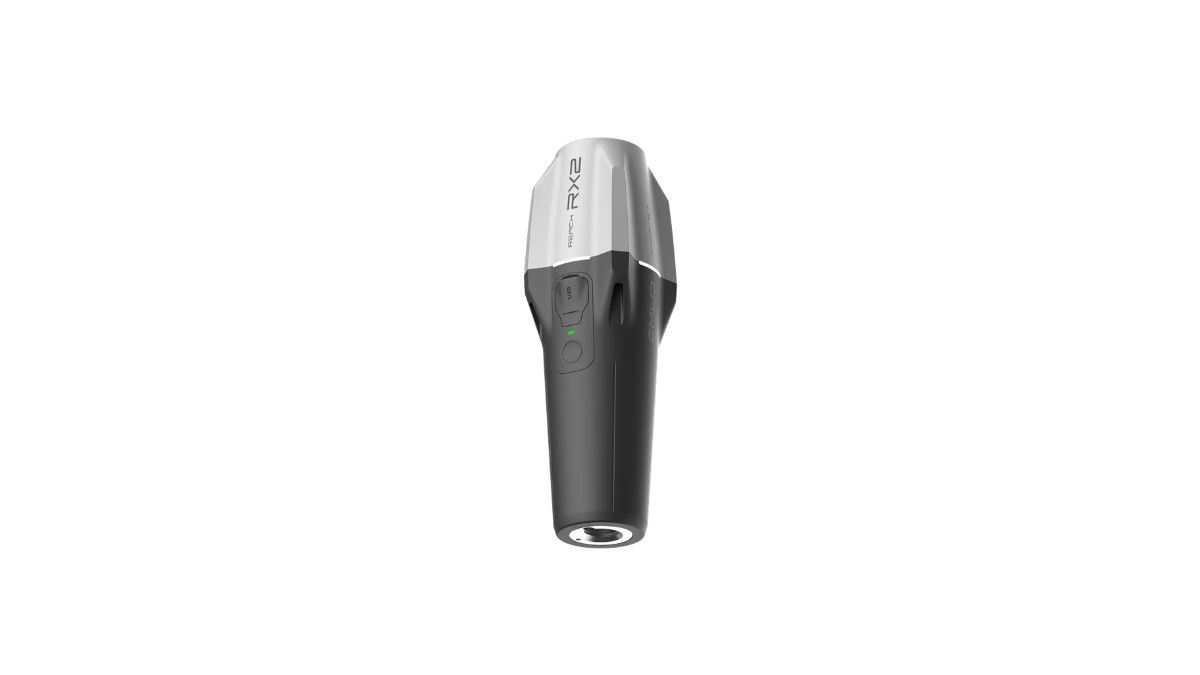
The RX2 cannot run as a base station. Emlid's own documentation states it plainly: it's designed exclusively as a rover and doesn't record raw data for post-processing either, so PPK workflows are off the table too. It's built to pair with an existing base, whether that's an RS4 on site, a permanent GNSS station, or an NTRIP network.
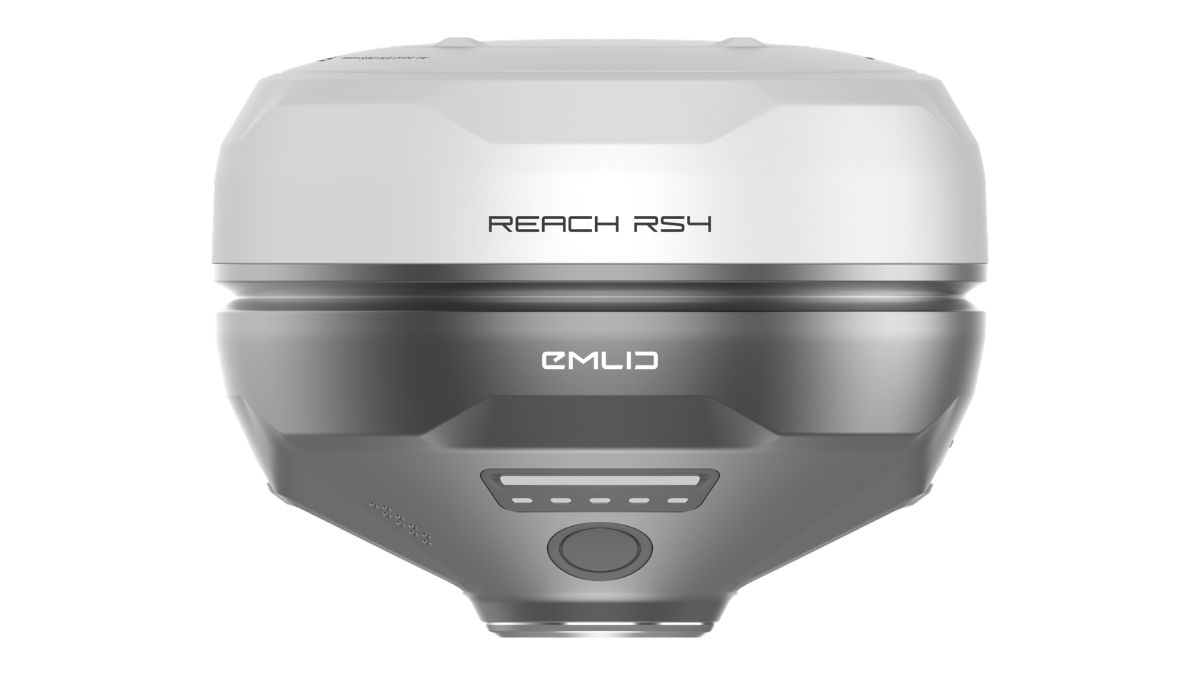
The RS4 covers both roles. Set it up as a UHF or LoRa base broadcasting to any RTK rover on site, or run it as the rover itself pulling corrections the same way the RX2 does. A team building out a base-and-rover pair from scratch needs at least one RS4 or equivalent base-capable receiver; the RX2 only ever fills the rover slot.
Getting Corrections: Built-In Modem vs Phone Tether
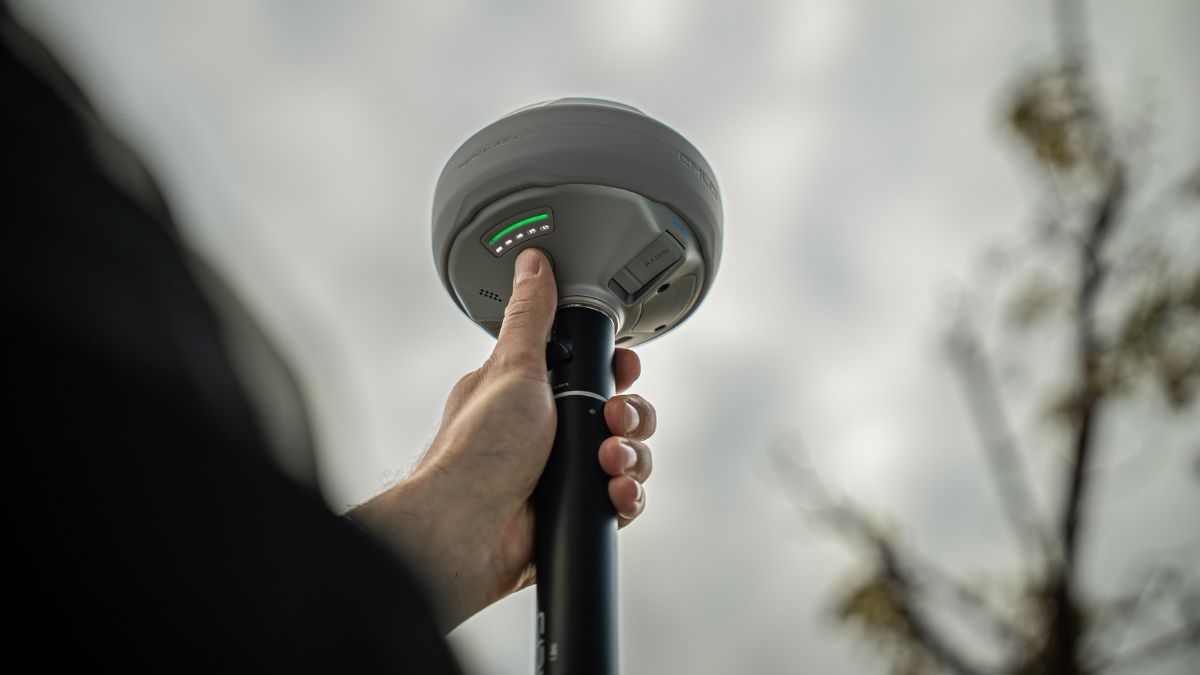
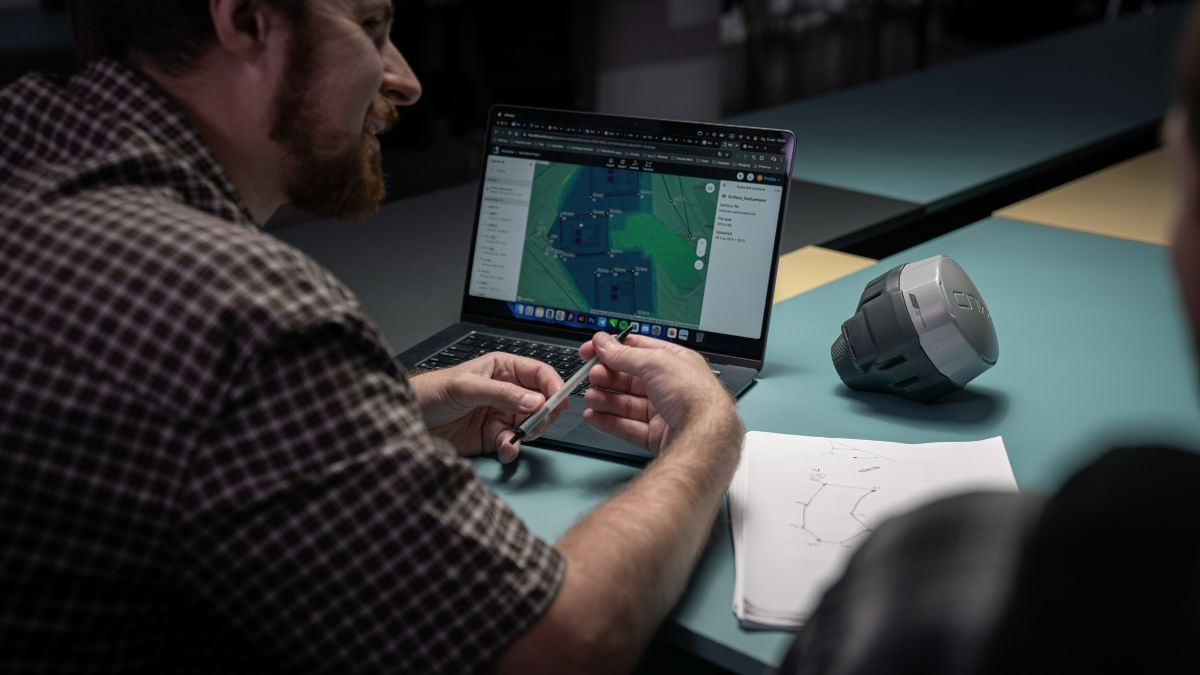
The RS4 carries its own cellular modem and accepts a Nano-SIM, so it pulls NTRIP corrections independently without needing a paired phone nearby. The RX2 has no cellular hardware at all. It reaches an NTRIP service through the Emlid Flow app, using the connected phone or tablet's own internet connection and relaying corrections to the receiver over Bluetooth.
In practice this means the RX2 depends on the field device staying connected and in Bluetooth range throughout the session, where the RS4 can run corrections on its own SIM regardless of what phone is nearby. Data use on the RX2 side is light, around 16MB over an 8-hour session, so it isn't a mobile data cost concern, but it is a dependency the RS4 doesn't have.
Size and Field Handling
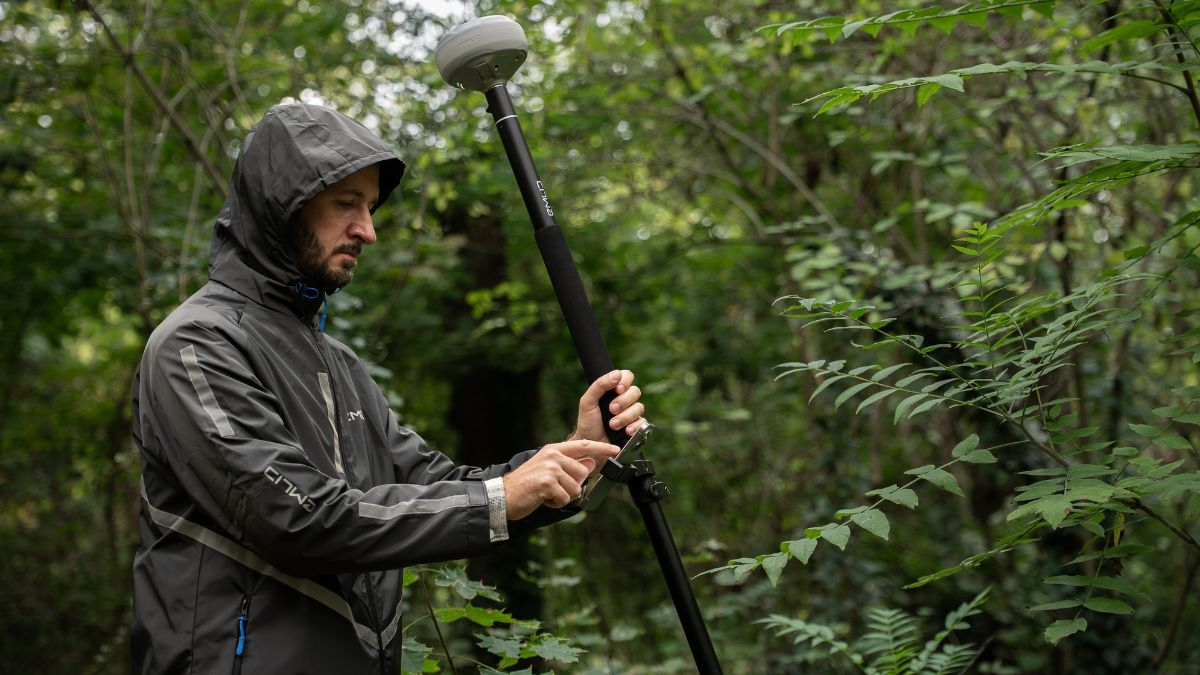
280g against 927g is a different category of tool to carry. The RX2's 172 x 51 x 51mm body fits a pocket or a pouch on a pole, built for GIS collection and construction layout where a surveyor is moving between points all day rather than running a fixed setup. The RS4's larger body suits a tripod-mounted base or a rover role where its extra radio hardware and cellular modem earn their weight.

Running Costs and What's Included
Both receivers ship with a year of Emlid Corrections included, the same VRS network covering confirmed UK coverage. Where NTRIP coverage is patchy or a project runs indefinitely, our RTK Network Subscription is a UK-priced alternative: £1,080.00 for a year of unlimited access across more than 2,000 base stations, or £180.00 for 30 days on single projects. Either receiver draws on the same subscription once its included first year runs out.
The RS4 also supports running entirely off its own base station rather than any subscription, a route the RX2 can't take on its own since it has no base mode.
Using Either Receiver for Drone Ground Control Points
Both models measure a ground control point to the same accuracy once RTK FIX is achieved, so neither has an edge on the point itself. The practical difference is setup: an RX2 needs a base already broadcasting, whether that's an RS4, a permanent station or an NTRIP network, while an RS4 can establish its own base on site if nothing else is available.
Mark the point with a Goecke 300 x 300mm aerial target plate at £10.00, so the coordinate measured on the ground is the pixel the processing software finds in DJI Terra. For the fuller workflow, control points versus checkpoints, placement and importing into DJI Terra, see our ground control points
Choosing Between the RX2 and RS4
An RX2 makes sense as a second or third rover on a team that already has an RS4 or another base-capable receiver running, or as the lighter, cheaper unit for GIS data collection and construction layout where nobody needs it to broadcast corrections. It doesn't suit a team buying one receiver to cover both base and rover duty, or any workflow that needs raw data for PPK.
An RS4 suits a single-receiver purchase where the same unit has to serve as a base on some jobs and a rover on others, sites without reliable NTRIP coverage where a self-hosted base is the only option, and any PPK-based workflow. Where weight and pocket-sized handling matter more than base capability, the RX2 does the rover job for £1,500.00 less.

RTK Network Subscription - 1Y Unlimited
More than 2000 Base Stations · Accuracy of 1.5cm with EU Certification
 Free Gifts Included
 Free Gifts Included
 Free Gifts Included
Common Questions
No. Emlid's own documentation states it's designed exclusively as a rover. Pair it with an RS4, RS3 or an NTRIP network for corrections instead.
Yes. It has no built-in cellular modem, so it relies on the Emlid Flow app relaying corrections from the phone's own internet connection over Bluetooth. The RS4 pulls corrections independently through its own Nano-SIM.
Yes, both hit 7mm + 1ppm horizontal and 14mm + 1ppm vertical once RTK FIX is locked. The difference is role and connectivity, not precision.
Emlid states its tilt accuracy as a formula, RTK + 2mm + 0.3mm per degree, rather than a single figure at one angle the way the RS4's 18mm at 30° is published. It doesn't publish an upper limit on tilt angle for the RX2.
No. Emlid's documentation confirms it doesn't record raw data for post-processing. The RS4's 16GB internal storage supports PPK workflows the RX2 can't do.