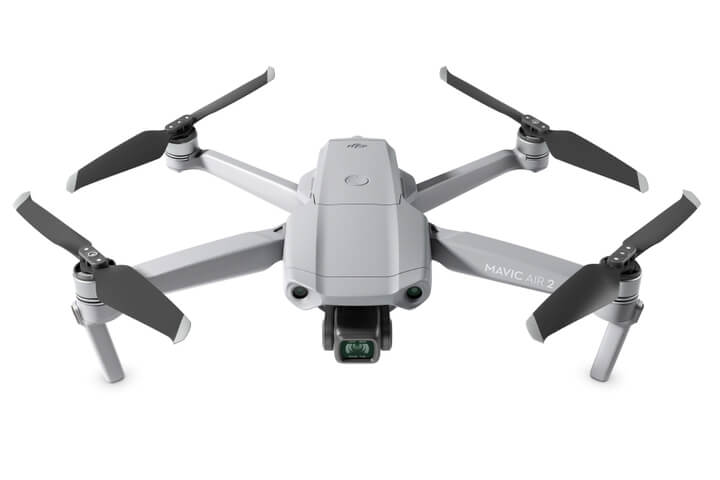
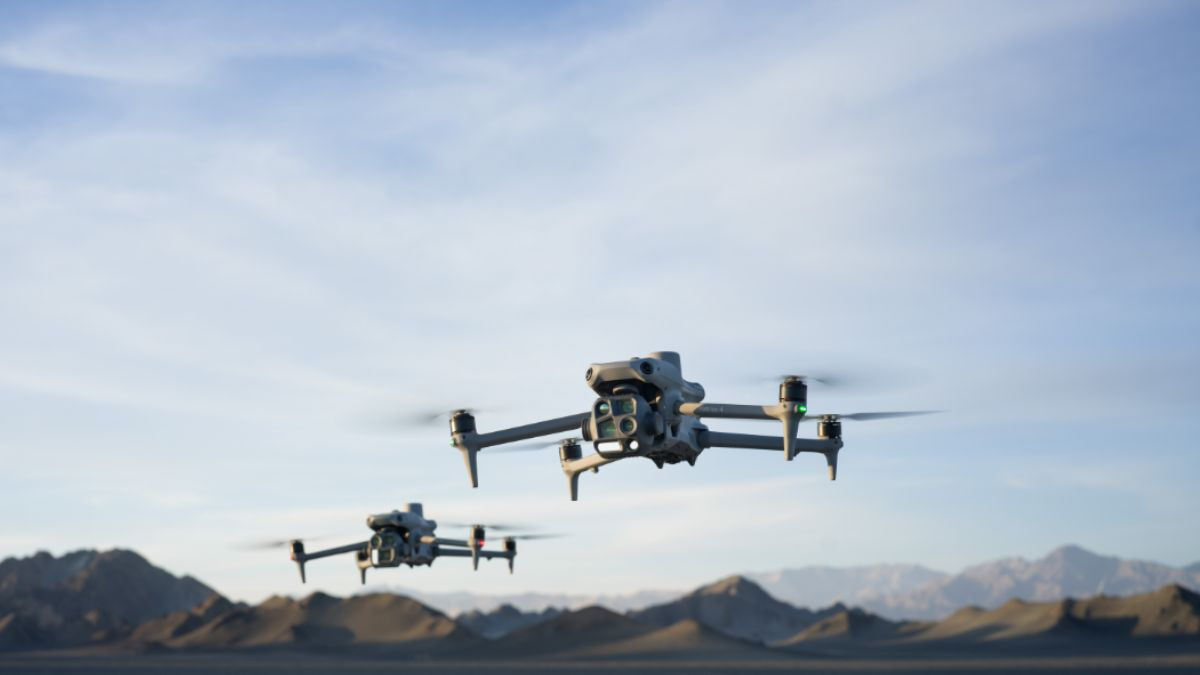
The Spec Comparison at a Glance
Spec | Matrice 4E | Matrice 4T |
|---|---|---|
Price | £3,940.00 | £5,910.00 |
Wide camera | 4/3-inch CMOS, 20MP, mechanical + electronic shutter | 1/1.3-inch CMOS, 48MP, electronic shutter only |
Thermal camera | None | 640 x 512, uncooled VOx; high gain -20°C to 150°C (±2°C or ±2%), low gain 0°C to 550°C (±5°C or ±3%) |
Medium tele | 1/1.3-inch CMOS, 48MP | 1/1.3-inch CMOS, 48MP |
Telephoto | 1/1.5-inch CMOS, 48MP | 1/1.5-inch CMOS, 48MP, up to 16x digital / 112x hybrid zoom |
NIR auxiliary light | No | Yes |
Takeoff weight | 1,219g | 1,219g |
Max flight time | 49 min | 49 min |
RTK accuracy | 1cm + 1ppm horizontal | 1cm + 1ppm horizontal |
The Core Difference: Shutter Type on the Wide Camera
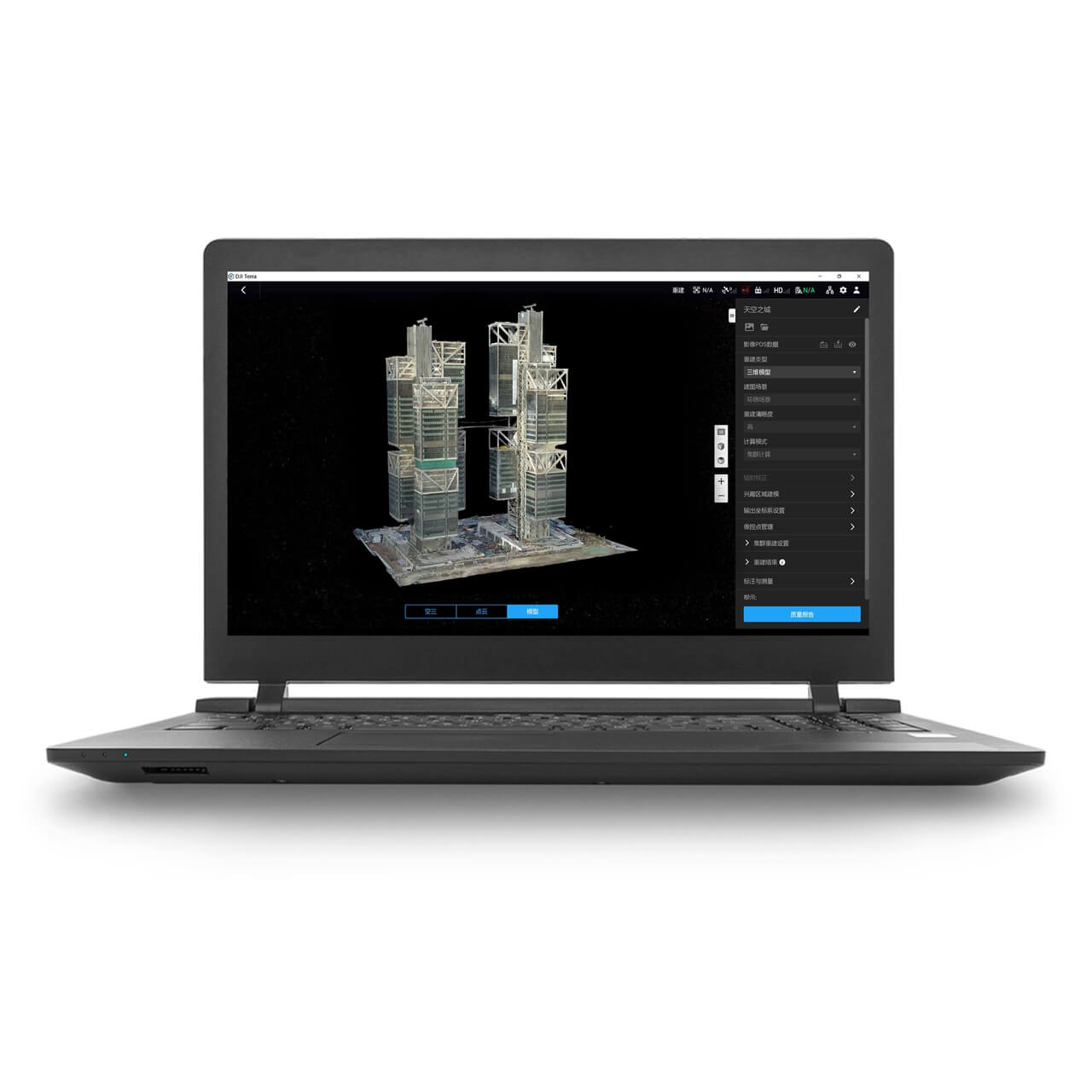
The M4E's wide camera has a genuine mechanical shutter, capturing the full frame at once rather than scanning it line by line. That matters specifically for mapping: a moving aircraft with an electronic-only shutter introduces rolling shutter distortion into every frame, which a mechanical shutter avoids entirely. The M4T's wide camera drops the mechanical shutter in exchange for a smaller sensor at higher resolution, 48MP against the M4E's 20MP, a trade that suits inspection and general imaging but not high-precision photogrammetry.

Thermal and Night Capability Is M4T-Only
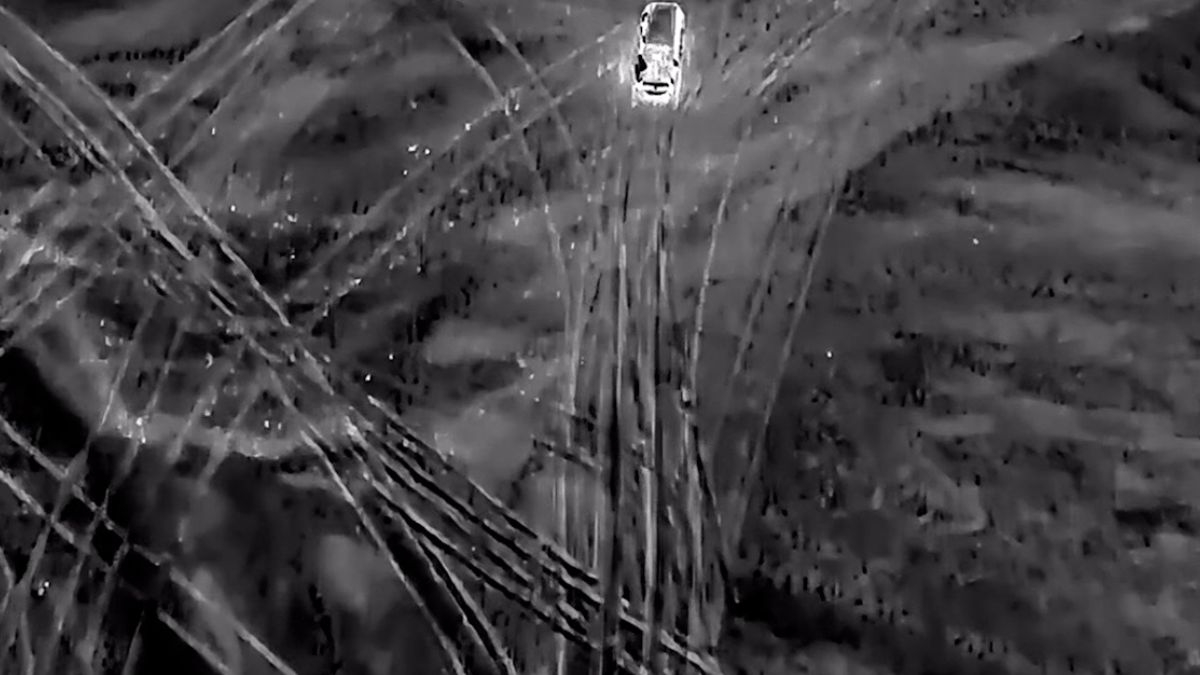
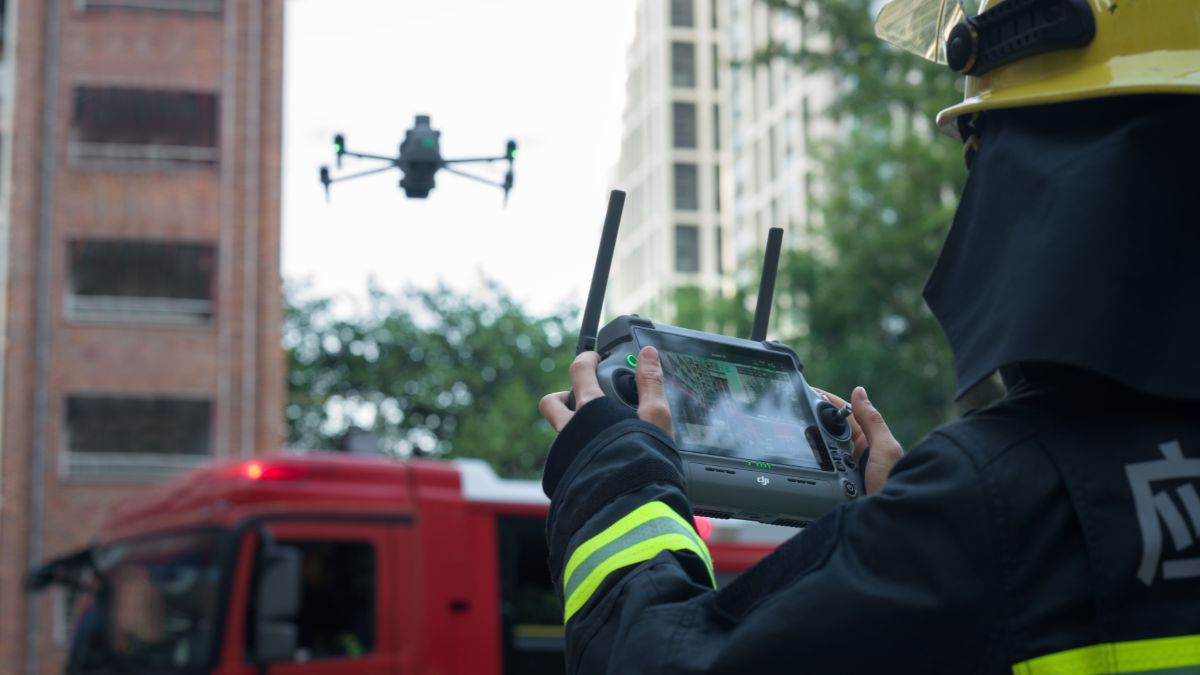
The M4T's thermal camera runs two gain modes at 640 x 512 resolution: high gain covers -20°C to 150°C at ±2°C or ±2% accuracy, for the everyday temperature range most inspection work falls into; low gain extends to 0°C to 550°C at a coarser ±5°C or ±3%, for genuinely hot subjects like fire or industrial plant. Paired with the NIR auxiliary light for illuminated night imaging, this is the hardware that puts the M4T ahead for search and rescue, firefighting, law enforcement and utility inspection work, none of which the M4E's camera set addresses at all.
Everything Else Is Identical
Airframe, weight, flight time, RTK accuracy, O4 transmission range and the integrated laser rangefinder are the same across both models. Buying one doesn't compromise on flight performance to get the other's camera capability, the decision is entirely about which sensor set the work actually needs.
Where Each One Fits
Land surveying, construction monitoring and any work where photogrammetric accuracy matters is where the M4E's mechanical shutter counts, not the price difference. Search and rescue, firefighting, law enforcement and utility or infrastructure inspection is where the M4T's thermal detection and night capability come into play, hardware the M4E's camera set doesn't address at all.
A fleet covering both kinds of work needs both aircraft rather than one doing double duty, since DJI doesn't sell the payloads as interchangeable between them.
 Free Gifts Included
 Free Gifts Included

DJI Matrice 4E RTK Bundle
The Ultimate Mapping Package · D-RTK 3, Tripod & Four Batteries Included
Common Questions
No, DJI sells the M4E and M4T as separate, complete aircraft rather than a shared airframe with an interchangeable camera module.
No, resolution isn't the deciding factor for mapping accuracy, shutter type is. The M4T's wide camera lacks the mechanical shutter that avoids rolling shutter distortion, which matters more than the extra megapixels for photogrammetry.
No, both aircraft share the same 49-minute maximum flight time and 1,219g takeoff weight.
Neither, both hold 1cm + 1ppm horizontal accuracy under the same RTK correction sources.
Mostly, it covers the thermal camera, the NIR auxiliary light and the different wide camera module together, not thermal alone.