How Each One Actually Delivers a Correction
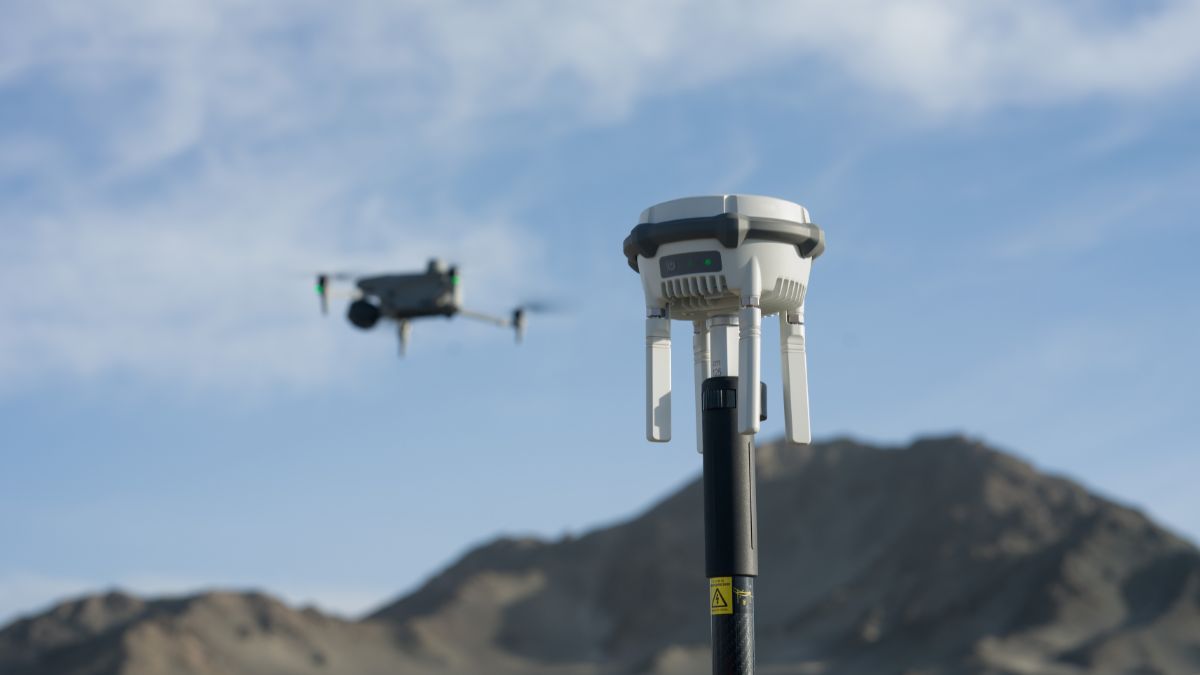
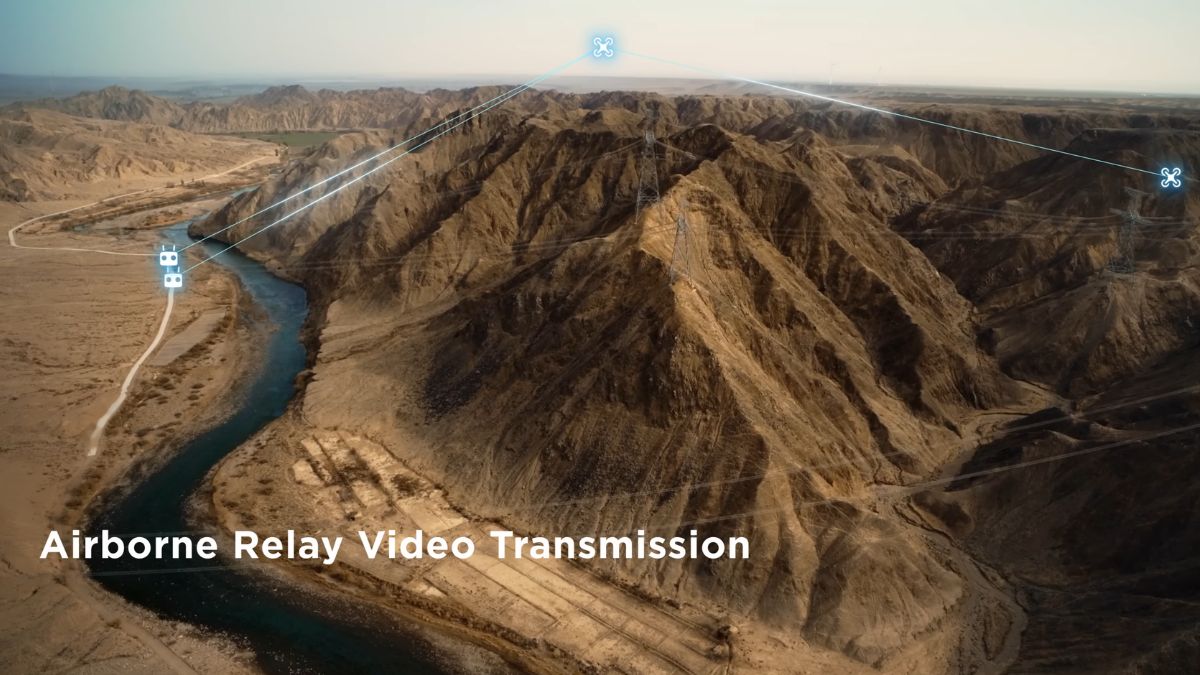
The D-RTK 3 works out its own precise position from satellites, then broadcasts a local radio correction directly to the aircraft, an entirely self-contained loop that doesn't touch the internet at all. NTRIP works differently: a network of fixed reference stations computes corrections centrally, and those corrections reach the aircraft's controller over a live internet connection, through DJI Pilot 2's Custom Network RTK setup. One is a closed local system, the other depends on two separate internet connections staying up for the length of the flight.
The Comparison at a Glance
Factor | DJI D-RTK 3 | NTRIP Network RTK |
|---|---|---|
Cost model | One-time hardware cost, £1,369.00 | Subscription, from £1,080.00 a year (unlimited) or shorter terms for occasional use |
Internet required | No, positions itself from satellites and broadcasts corrections locally | Yes, continuously, on both the correction network and the controller |
Accuracy | 1cm + 1ppm horizontal, 3cm + 1ppm vertical | Typically around 1.5cm horizontal on a UK/European network |
Range | Up to 40km FCC to the Matrice 400, 15km FCC to most other DJI Enterprise aircraft | No practical range limit, works anywhere the network and mobile signal both reach |
Setup on site | Physical station to transport, position and level before each job | No physical setup, connect through DJI Pilot 2's Custom Network RTK settings |
Site dependency | Needs an open, unobstructed site for satellite tracking and radio line of sight to the aircraft | Needs reliable mobile signal at the site, not satellite line of sight |
Best suited to | Remote sites with poor mobile coverage, repeat visits to the same site, or sites needing an independent, self-contained correction source | Sites with reliable signal, one-off or infrequent jobs, teams covering many different locations |

Cost Comes Down to How Often the Work Repeats
£1,369.00 once against £1,080.00 a year looks close at first glance, but the comparison changes with use. A team running RTK jobs every week gets the D-RTK 3 paid back inside a year and owns the hardware afterward; a team flying RTK-dependent jobs occasionally, in different locations each time, gets more value from a subscription and never has to transport or level a base station on site. Drone Safe Store's RTK Network Subscription is also available in shorter terms for genuinely occasional use, worth checking against a full year's cost if RTK jobs are infrequent.
Site Conditions Decide More Than Price
A remote site with poor or no mobile signal rules NTRIP out regardless of budget, since the correction simply can't reach the controller without a live connection. The D-RTK 3 doesn't care about mobile coverage at all, it only needs an open site for its own satellite tracking and a working radio link to the aircraft. The reverse is also true: a site inside a city or an industrial area with strong signal but a poor satellite view for a ground-mounted base station can favour NTRIP, since the network's own reference stations aren't sited where the drone is flying.
What This Means in the Field
Teams working the same site repeatedly, or operating in areas with known patchy signal, get more consistent value from owning a D-RTK 3 outright. Teams moving between many different sites, or flying RTK jobs only occasionally, usually get more value from a subscription and the lighter kit list that comes with it. Some operators run both, a D-RTK 3 for remote or poor-signal sites and an NTRIP subscription for everything else, rather than treating the choice as permanent.

RTK Network Subscription - 1Y Unlimited
More than 2000 Base Stations · Accuracy of 1.5cm with EU Certification
 Free Gifts Included
Common Questions
No, it positions itself from satellites and broadcasts corrections locally to the aircraft, entirely independent of internet or mobile signal.
Close but slightly behind on paper, around 1.5cm horizontal on a typical UK network subscription against the D-RTK 3's 1cm + 1ppm. In practice, a stable connection on either system delivers accuracy well within normal survey and mapping tolerances.
NTRIP, provided the site has reliable mobile signal, since a shorter subscription term avoids the D-RTK 3's £1,369.00 upfront cost entirely.
Yes, many operators keep both, using the D-RTK 3 for remote or poor-signal sites and NTRIP for everything else rather than committing to one system permanently.
The correction stream stops and RTK accuracy degrades until the connection returns, since NTRIP depends on that link staying live throughout the flight. A D-RTK 3's local radio link isn't affected by mobile network conditions at all.